I am live blogging from North Carolina where we are waiting ... for what?
My mother is gravely ill with cancer and a broken rib. I think we're very close to the end now. My brother Allen called me early Friday morning and said, "If you want to see Mom, you had better come sooner rather than later." My brother Bill and I arrived Saturday afternoon. All of my other brothers and sisters and their respective spouses are here too.
Mom is shockingly pale and frail--downright gaunt, with sunken eyes. She needs help to roll over, and barely has the energy to talk when she's awake. When I arrived, she was dozing in a new recliner chair because it's difficult for her to lie completely flat in bed and be comfortable. Allen has engaged a nurse's assistant to sit with her during the late night and early morning so that he and his wife Nita can get some sleep. They are exhausted. During the night, the nurse's assistant moved Mom to the bed, and she's been resting there intermittently ever since. We've been taking turns visiting her and tending to her needs as best we can.
I have never seen Christlike love in action so powerfully as I have in the last 24 hours or so. My brothers and sisters have to give Mom water from a sippy cup, and when she feels like eating, we spoon feed her cream of wheat, pureed peaches, and the occasional cup of chicken broth. They do it with such incredible tenderness! It's a small--wholly inadequate--way we can say thank you for the millions of times Mom cared for us with equal tenderness over the years when we were sick.
Yet even the in-laws and the newest members of our family that don't have that long history with Mom recognize what an extraordinary woman she is and love her for it. Yesterday, Mom was complaining of itchy and dry skin. My sister-in-law Carla, the newest member of our family, gently and tenderly rubbed on some lotion so that Mom could feel better. I was so touched by that! I sat and quietly said the Rosary while she slept earlier this afternoon. There is little I can do physically for Mom because of my disability, and it makes me feel guilty, but she told me she's glad I'm here.
Even though she's so ill, she's still Mom, with a wry sense of humor and a never-ending concern for her kids. A couple of nights ago the nurse's assistant recognized that Mom needed a catheter and demanded that a nurse come out in the wee hours of the morning to put one in. We started talking about how important it is to demand what you need when you're sick. I said, "You don't get extra points for being a hero." She said, "You don't even get extra points for being polite." She could still give a lopsided smile when somebody told a joke.
As if all of this situation with Mom weren't bad enough, I've been hobbled for the past couple of weeks by a nasty intestinal something-or-other. Yesterday, I was feeling particularly vile. The first words she said to me today were a question about how I was doing. When I told her I was feeling better, she said, "I'm so glad." She worries about her daughter-in-law Nita, who worries about her. Always a Mom!
We are simply waiting for whatever happens next.
Mary, help of Christians and help of the sick, pray for us.
Sunday, June 25, 2006


Saturday, June 17, 2006
I Am Not Worthy!
I have been given an honor I did not expect.
K T Cat, Maximum Leader of the Feline Theocracy, has graciously granted me the title Holy Scribe of the Feline Theocracy. You are too generous, O Feline One! May you be free of hairballs forever! Jacob the Syrian Hamster, faithful beadle of the Theocracy, was particularly impressed with the tribute I wrote to my Dad. What can I say? I merely wrote from my heart. I will strive to be a faithful servant of the Maximum Leader, although it may be difficult for me to scratch behind her ears since I am in South Carolina and she is in San Diego.
Update on my Mom
Thanks to all of you who have been praying regarding my Mom, Cecilia (Cele for short), and her battle with cancer. Here's an update. I'm afraid the news isn't good. She had her PET scan last Sunday. The cancer is in her lungs and lymph nodes. The oncologist is estimating that without chemo, she has perhaps six months to live. If she takes chemo, she could add two or three months, but that's about it. As if that weren't bad enough, she's got other health problems--osteoporosis, stress fractures, chronic back pain, muscle spasms, and deteriorating vision, to name a few--that would make chemotherapy even more difficult than it normally is. She hasn't made any decision yet, but my brothers and sisters tell me she's leaning toward taking no treatment because chemo would be an awful lot of discomfort for very little benefit. The kids will do everything we can to make her remaining time as comfortable as possible and will spend as much time with her as we can. One of my brothers and I are going up to visit her next weekend.
I am holding up fairly well by leaning on family and friends here in town and in other places that I stay in touch with by telephone. I'm very blessed to be part of a close-knit family. When there's a crisis like this, we rally and support each other. I must confess I'm having a hard time praying about this because I don't know what to pray for. I don't want my mother to die, but I don't want her to linger and suffer needlessly, and I don't want to oppose God's will. Please pray for Mom and for the whole family.
Thanks.
I am holding up fairly well by leaning on family and friends here in town and in other places that I stay in touch with by telephone. I'm very blessed to be part of a close-knit family. When there's a crisis like this, we rally and support each other. I must confess I'm having a hard time praying about this because I don't know what to pray for. I don't want my mother to die, but I don't want her to linger and suffer needlessly, and I don't want to oppose God's will. Please pray for Mom and for the whole family.
Thanks.
Thursday, June 08, 2006
Comments! We Get Comments!
Well, goshdarmit, it looks like somebody reads this li'l ol' blog after all!
I e-mailed Rod Bennett to tell him how much I was enjoying his series on C. S. Lewis and pulp fiction and invited him to visit this blog. Rod graciously responded that he had already seen my blog.
Janjan left a comment thanking me for mentioning her blog and adding her to the blogroll, and another wishing me luck in my fiction writing endeavors.
Finally, I must make a correction and express my thanks for the merciful benevolence of K. T. Cat, Maximum Leader of the Feline Theocracy. In my mention of The Scratching Post blog, I erroneously identified Glenn Reynolds as the human member of the triumvirate that runs TSP. The human left a comment informing me that he is not Glenn Reynolds and adding that he wishes to remain an anonymous servant of The Maximum Leader. Many thanks for your charity in not rebuking me further for my error, O Feline One. I am not worthy. May you have catnip, fresh milk, and balls of yarn forever!
It's nice to be noticed. I feel almost famous. Are my 15 minutes up yet, Mr. Warhol?
I e-mailed Rod Bennett to tell him how much I was enjoying his series on C. S. Lewis and pulp fiction and invited him to visit this blog. Rod graciously responded that he had already seen my blog.
Janjan left a comment thanking me for mentioning her blog and adding her to the blogroll, and another wishing me luck in my fiction writing endeavors.
Finally, I must make a correction and express my thanks for the merciful benevolence of K. T. Cat, Maximum Leader of the Feline Theocracy. In my mention of The Scratching Post blog, I erroneously identified Glenn Reynolds as the human member of the triumvirate that runs TSP. The human left a comment informing me that he is not Glenn Reynolds and adding that he wishes to remain an anonymous servant of The Maximum Leader. Many thanks for your charity in not rebuking me further for my error, O Feline One. I am not worthy. May you have catnip, fresh milk, and balls of yarn forever!
It's nice to be noticed. I feel almost famous. Are my 15 minutes up yet, Mr. Warhol?
Sunday, June 04, 2006
Fiction Is a Necessity
I've been thinking about writing again.
Not just blogging--but writing fiction, too. Life seems a mite drab these days: Get up, go to work, come home, look at stack of unpaid bills, ignore unpaid bills if possible, mourn deceased father, worry about elderly mother, regret mistakes and missed opportunities, especially in relationships. Lather. Rinse. Repeat.
There's nothing like the death of one parent, the illness of the other, and your own physical problems to make you think about your own mortality and the fact that none of us knows how long we have on this earth. I don't want to spend my whole life slogging through stuff I don't want to do and miss out on some of the things I do want to do. I realize life can't be a 24/7/365 thrill ride, and that we all have to carry our crosses, but I would really like something to get excited about in my life--something that adds color and challenge, and a feeling of having created and accomplished something good. Something that makes me get up out of bed and say, "Wow! Today I get to . . . (fill in the blank)." Writing may be that something. I have notes and drafts for several unfinished fiction projects on my hard drive--mostly of a comic booky, pulpy, science fictiony, type nature. I, the holder of a Master's in English, with a specialization in Renaissance Lit., have to confess: I love pulp, or at least I used to. Somewhere along the line I lost interest and it became much less important. Perhaps I overdosed on it and provoked a reaction. Can I pick it back up again? I don't know.
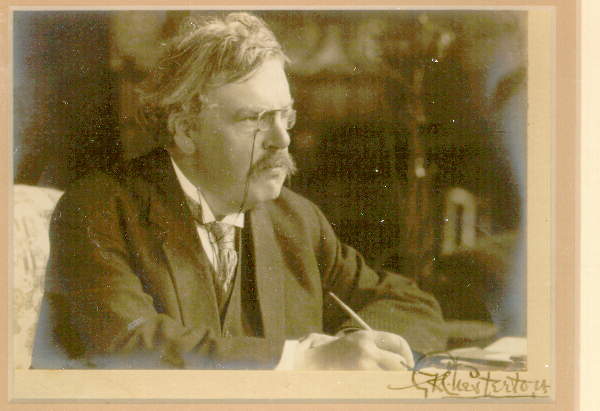
Why pulp? Why not higher brow literature? I've written some of that too over the years. I think for now I would just like to try to write something fun. Fun to write and fun to read. No moral, no message, no deeper meaning other than the victory of good over evil, which might be the theme of all great literature. I want to see the hero save the world and get the girl. I think all literature, even if it deals with serious issues, arises out of a need to imagine, to create, to pretend, to play. I want to play, at least for a little while. Pulpy, comic booky, science fictiony type stuff appeals to me, I suppose, because it brings that desire to play and the desire to see good triumph over evil down to their most basic and obvious level. It's hard to take Superman seriously as a work of literature, but it's easy for a nerdy guy like me to identify with Clark Kent, wish he were Superman, win the love of a girl like Lois Lane and whup a villain like Lex Luthor. As the great Catholic essayist G. K. Chesterton observed:
The simple need for some kind of ideal world in which fictitious persons play an unhampered part is infinitely deeper and older than the rules of good art, and much more important. . . Literature is a luxury; fiction is a necessity . . The poor--the slaves who really stoop under the burden of life-- have often been mad, scatter-brained, and cruel, but never hopeless. That is a class privilege, like cigars. Their drivelling literature will always be a "blood and thunder" literature, as simple as the thunder of heaven and the blood of men.
I'm not poor, but every once in a while I feel stooped under the burden of life and need some "blood and thunder" to give me hope. Let's go make some blood and thunder!
Blogroll Business
Howdy once again, blogfans, and welcome to the NEW AND IMPROVED "It's All Straw." For your convenience and mine, the blogroll on the left has been alphabetized and expanded for easy access to favorite blogs old and new.
Among my particular new favorites, Rod Bennett over at tremendous trifles has been running a fascinating series of posts on the influence of pulp and science fiction on the writing of C. S. Lewis. (part one, part two, part three, part four) What Rod has discovered may surprise you. Seems ol' "Jack" Lewis was more of a sci-fi geek than we thought. Do check it out. I know I've railed against some really vapid pop culture on this blog in the recent past, but I've always had a soft spot for fantasy, sci-fi, adventure fiction, classic pulp, and their modern day descendants, such as Star Trek and Star Wars.
Once a Chicken, Now a Fish is the story of blogger Janjan's circuitous path from Reform Judaism to Catholicism, told with dry wit, honesty, and style. Her blog With Issue continues the story as she struggles to live out her faith like the rest of us, while looking out on this crazy world we live in. Shalom, and welcome to the Church, Jan!
The blogger known only as Anonymous Teacher Person gives us a glimpse inside her Catholic high school classroom with her blog Scrutinies. Her career as a Teacher Person may be coming to an end, however, as she and her TeacherHusband are moving and mulling the possibility of having more TeacherKids. Prayers and best wishes as they consider what comes next! Blogger Rachel Swenson Balducci tells us what it's like to live, love, and bring up kids Catholic in her male-dominated Testosterhome.
Blogger and author Mike Aquilina instructs us in The Way of the Fathers and explains why the teaching and practice of the earliest Christians are still relevant today. For my money, knowing something about the real history of the early church is a useful and badly needed corrective to all of the nonsense and lies spouted in The Da Vinci Code.
Over at The Scratching Post team bloggers KT Cat, Jacob the Syrian Hamster, and their pet human, Glenn Reynolds, "make the business case for kindness." You'll find conservative political commentary and "World of Good Blogburst" posts which describe various opportunities for community service. The first-person (um, first-animal?) reports on the ever-so-trying life of KT and Jacob are hilarious, but woe to ye who incur the terrible wrath of the mighty Feline Theocracy! Ignore their "catwa" at your peril, unbeliever!
Finally, even though he's been on my blogroll for awhile, I gotta give a shout-out to my former colleague Mark Mossa, S. J. and his blog You Duped Me, Lord. When I last saw him, Mark and I were graduate students in English at the University of South Carolina. Now Mark is a Jesuit "scholastic" or candidate for ordination, scheduled to become a priest in 2008. God bless you, Mark, as you pursue this vocation.
Watch for new and interesting additions to the blogroll as I discover them.
Among my particular new favorites, Rod Bennett over at tremendous trifles has been running a fascinating series of posts on the influence of pulp and science fiction on the writing of C. S. Lewis. (part one, part two, part three, part four) What Rod has discovered may surprise you. Seems ol' "Jack" Lewis was more of a sci-fi geek than we thought. Do check it out. I know I've railed against some really vapid pop culture on this blog in the recent past, but I've always had a soft spot for fantasy, sci-fi, adventure fiction, classic pulp, and their modern day descendants, such as Star Trek and Star Wars.
Once a Chicken, Now a Fish is the story of blogger Janjan's circuitous path from Reform Judaism to Catholicism, told with dry wit, honesty, and style. Her blog With Issue continues the story as she struggles to live out her faith like the rest of us, while looking out on this crazy world we live in. Shalom, and welcome to the Church, Jan!
The blogger known only as Anonymous Teacher Person gives us a glimpse inside her Catholic high school classroom with her blog Scrutinies. Her career as a Teacher Person may be coming to an end, however, as she and her TeacherHusband are moving and mulling the possibility of having more TeacherKids. Prayers and best wishes as they consider what comes next! Blogger Rachel Swenson Balducci tells us what it's like to live, love, and bring up kids Catholic in her male-dominated Testosterhome.
Blogger and author Mike Aquilina instructs us in The Way of the Fathers and explains why the teaching and practice of the earliest Christians are still relevant today. For my money, knowing something about the real history of the early church is a useful and badly needed corrective to all of the nonsense and lies spouted in The Da Vinci Code.
Over at The Scratching Post team bloggers KT Cat, Jacob the Syrian Hamster, and their pet human, Glenn Reynolds, "make the business case for kindness." You'll find conservative political commentary and "World of Good Blogburst" posts which describe various opportunities for community service. The first-person (um, first-animal?) reports on the ever-so-trying life of KT and Jacob are hilarious, but woe to ye who incur the terrible wrath of the mighty Feline Theocracy! Ignore their "catwa" at your peril, unbeliever!
Finally, even though he's been on my blogroll for awhile, I gotta give a shout-out to my former colleague Mark Mossa, S. J. and his blog You Duped Me, Lord. When I last saw him, Mark and I were graduate students in English at the University of South Carolina. Now Mark is a Jesuit "scholastic" or candidate for ordination, scheduled to become a priest in 2008. God bless you, Mark, as you pursue this vocation.
Watch for new and interesting additions to the blogroll as I discover them.
Saturday, June 03, 2006
Bad News
It looks like my Mom's cancer is back.
She had one bout of lung cancer in 2002-2003. My Dad died of lung cancer in 2005. She actually got sick before my Dad did, but the doctors caught the cancer in its early stages and it responded well to chemotherapy and radiation. This time it looks as though there are multiple tumors in both lungs and they may be farther along than the first time. I'm getting my information indirectly from my brother, who's getting it from my sister-in-law who got it from the nurse in the oncologist's office. Mom herself is pretty stoic about the whole thing, implying that the doctor's just over-reacting, or that she's just old and ill health is to be expected. We'll have more definitive information after she has a PET scan next weekend. There is still much we don't know. Prayers are requested. My Mom's name is Cecilia, Cele for short.
I am trying not to freak out over the whole thing. It doesn't seem quite real yet. But it is depressing. I just finished writing a remembrance of my Dad, and the thought that I may soon have to write one for my Mom, is disturbing to say the least. I will keep you posted, adding more details as they become available. God's will be done.
She had one bout of lung cancer in 2002-2003. My Dad died of lung cancer in 2005. She actually got sick before my Dad did, but the doctors caught the cancer in its early stages and it responded well to chemotherapy and radiation. This time it looks as though there are multiple tumors in both lungs and they may be farther along than the first time. I'm getting my information indirectly from my brother, who's getting it from my sister-in-law who got it from the nurse in the oncologist's office. Mom herself is pretty stoic about the whole thing, implying that the doctor's just over-reacting, or that she's just old and ill health is to be expected. We'll have more definitive information after she has a PET scan next weekend. There is still much we don't know. Prayers are requested. My Mom's name is Cecilia, Cele for short.
I am trying not to freak out over the whole thing. It doesn't seem quite real yet. But it is depressing. I just finished writing a remembrance of my Dad, and the thought that I may soon have to write one for my Mom, is disturbing to say the least. I will keep you posted, adding more details as they become available. God's will be done.
Monday, May 29, 2006
Remembering Dad

Today is Memorial Day, the day Americans pause to remember those who gave their lives in service to their country. Today I would like to remember my Dad, William Stewart Leslie (1923-2005). He did not fall in combat, but he served honorably in World War II and the Korean Conflict. He loved his country and taught me to do the same. He fought the real battle to provide for his wife and six kids, all of whom grew up to become decent, honorable, compassionate men and women because of lessons he taught us. He passed from this life in February 2005 after a long battle with lung cancer.
In World War II he served with the U. S. Ninth Air Force based in England. For the most part, he flew P-51 fighter planes. One of his assignments was to shoot down German V-1 and V-2 rockets launched from Holland. He said the rockets were so slow and crude that often just the "prop wash" or air turbulence from his plane flying past the rocket was enough to send it crashing harmlessly into the sea. He told us stories of the funny things that happened during his wartime service: the time he got his cap blown off because he unwittingly stood in front of a loaded cannon, or the time he was appointed "mess officer" for his unit despite the fact that he had no idea how to run a mess hall. He never talked about the scary things, of which I'm sure there must have been a few. I believe he was shot down once. He didn't like to talk about it. Towards the end of his life he had nightmares from which he woke up screaming. I couldn't help wondering if those came from long-buried frightening moments from his war years.
I asked him once if there was ever a moment when he was afraid for his life, scared that he might die. No, he replied, because when you're 19 years old, you're too dumb to be scared. You are convinced that you're 20 feet tall and bulletproof. The other guy will get shot, not you. When I saw TV news stories about the dedication of the World War II Veterans Memorial, I was overcome with a wave of pride and affection for him and called to tell him so. His response, like so many others of "The Greatest Generation" was typical.
"Shoot," he said, "I didn't really do anything."
Yes, you did. And we are grateful.
During the Korean Conflict he was recalled to active duty from the reserves. Somewhere along the way he mentioned his desire to learn Russian, and the next thing he knew, he was enrolled in a special program in Washington, D. C. to study Russian language, history, culture, and geopolitics. It wasn't top secret, but it was confidential. He was instructed to wear civilian clothes and, if asked, just say that he worked for the Defense Department and leave it at that. I believe the photo you see might come from this period. You'll notice that he's standing or sitting against a neutral background, he's well dressed, and looking directly at the camera with a serious expression. It looks like an ID or passport photo to me, but I can't be sure.
Many of his professors in this special program were White Russians or anti-communists who fled after the revolution of 1917. He was amazed at what they knew and how they knew it. Once, after class, one of his professors approached him furtively, looking both ways before speaking.
"Gaspadin (Mister) Leslie," the man said in Russian, "You are . . . pilot, da?"
"Da," Dad replied. He hadn't told anyone he was a pilot.
"I teach you Russian. You teach me to fly, da?"
"Da."
Dad went to a local airport, rented a small plane, and took his professor up for a flying lesson, but quickly realized he didn't have the specialized vocabulary needed to explain the more technical aspects of flying: artificial horizons, ailerons, rudders, pitch, and yaw, and so forth. His efforts to teach his teacher how to fly ended right there, but I've always thought it was a great story. There was also the time a friend of his passed himself off as a native Russian to impress a bimbo and Dad played along; or the time a drunk driver rammed into the picture window of the trailer Dad had rented while he, Mom, and my sister Susan (an infant at the time) were driving cross country. Dad was full of stories, and he told some of them so many times, we were sick of them. Now that he's gone, I'd give anything to hear him tell them again.
He was not a perfect man (no one is), but he was a good man. I think, like many men who came of age during the Great Depression and World War II, he found it difficult to express his deepest emotions in public. Bragging, being conceited, or having an overly exalted opinion of oneself was the worst sin a man could commit. You were supposed to work hard, do your duty, and not call attention to yourself. People made fun of Bob Dole, also a World War II veteran, for sometimes speaking of himself in the third person ("Bob Dole knows . . .") but I believe the habit came out of that fundamental modesty of his generation. Nowadays, when celebs and ordinary people get on TV talk shows, air their dirty laundry in public, and then get all weepy while the rest of us watch, such circumspection and humility are refreshing.
Sometimes, however, I think Dad went too far in trying to prevent us from becoming conceited. His favorite tactic was to conceal his real feelings behind a joke or a left-handed compliment. It made me think sometimes that nothing I did mattered to him. In college I was nearly a straight A student, but in college I also acquired my first serious girlfriend, and I loved her with a passion that only those in love for the first time can manage. I was worried that my grades were slipping because we were spending so much time together. I needn't have worried. Dad's response? "He had a 4.0, but then he met this girl. Ha, ha, ha." It made my blood boil.
I once asked him angrily why he seemed so allergic to paying me a compliment in public. "Because I don't want you to get the big head," he snapped back. We had some friction over the years, to say the least. If there was any good thing about his long final illness, it was that we each had time to look past the bluster and bravado and hurt feelings and say to each other, "I love you and I am proud of you."
I know that he loved me despite the fact that he sometimes had trouble expressing it. He had many jobs throughout his life, and some were more successful than others: airline pilot, filmmaker, salesman, retail business owner. For most of the time I was growing up, he was the regional sales representative for a company that sold heavy construction equipment. His territory extended from Maryland to Mississippi, and often he would leave on business trips on Monday morning and not return until Friday night. That had to be hard, lonely work, but he did it because he loved us. He never once failed to provide us with anything we needed (and often just things we wanted) even if it meant considerable personal and financial sacrifice for him. My three-week trip to England when I was in college that he paid for is a prime example. Now that I'm living on my own and struggling to pay bills just for myself, I have a glimpse of what he must have struggled with to support and provide for a wife and six children.
He stayed with me faithfully whenever I had to be hospitalized for surgery related to my disability. Once in particular, I went through a kind of withdrawal as I came down off the painkillers and anesthesia. I was terrified, convinced that something awful was about to happen, and didn't want to be left alone. He stayed with me, after visiting hours were over, until I fell asleep. I awoke hours later in complete peace and darkness as all the chemicals had left my body. I called out to him but realized he must have slipped out after I fell asleep. I was so grateful to him! Last year, after his passing, when I was in ICU with that terrible bladder infection, I thought that if I squinted hard enough I could almost see him sitting in the chair at the foot of the bed as he had so faithfully so many times before.
There's a sequence from the movie It's a Wonderful Life that expresses perfectly how I feel about my Dad. Young George Bailey is working for Mr. Gower, the local druggist, as a delivery boy. One day, George notices that Mr. Gower has received a telegram informing him that his son has died of influenza. Mr. Gower, distraught with grief, has accidentally put rat poison into some capsules, and sent George out to deliver them, thinking they are medicine for a sick little boy. George, knowing the truth, looks around desperately for help. Suddenly, he sees a billboard reading, "Ask Dad. He knows." George runs off, tries to tell his father what's happened, and waits for Mr. Gower to come to his senses. When George tells Mr. Gower what's happened, the man is incredibly grateful. George's quick thinking has saved a boy's life and Mr. Gower's business.
Dad was always that anchor of stability and wisdom for me in the same way that George Bailey's dad was for him. Even when we were bickering, I knew that if I really got in a jam, I could ask Dad. He knew. He would fix it. He would make it OK. Because he was Dad. I miss him. But I remember what he taught me about hard work and doing your best and keeping your promises. And I know. And it will be OK.
Eternal Rest grant unto him, O Lord, and may perpetual light shine upon him. Amen.
Rest in peace, Dad. I love you.
Whales on Stilts!
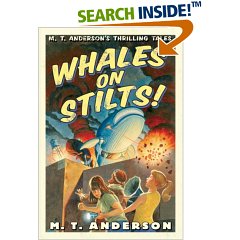
Whales on Stilts! by M. T. Anderson. Read by Marc Cashman. (Listening Library).
Our Memorial Day Weekend blogstravaganza continues with the fourth (and probably final) installment of a series of reviews of audiobooks for children and teens that I've listened to recently.
Can three twelve-year-olds save the world from a sinister rampage by stilt-walking, red-eyed, laser-wielding whales? Can perfectly ordinary Lily prove she's just as smart and just as exciting as her friends who invent amazing gadgets and fight werewolves? Can M. T. Anderson, the author of Feed, deliver a hilarious parody of the juvenile adventure novel, taking swipes at the Hardy Boys, Nancy Drew, Tom Swift, and Goosebumps in the process? Tune in to Whales on Stilts! and find out. You'll hear Katie say . . .
It all begins in the quiet little town of Pelt, where, "you could get arrested for going five miles over the speed limit. It was that kind of town." Twelve-year-old Lily Gefelty is quiet and observant--so observant in fact that she sees things others miss. For instance, she's the only one who thinks it odd that Larry, her Dad's boss, wears a bag over his head, has rubbery blue skin, periodically douses himself in brine, and gloats openly about taking over the world. When Lily brings up this last particularly troublesome point to her Dad, he reassures her. "People use irony all the time," he says. "They don't always mean what they say."
Lily isn't entirely sure this is just an instance of adult wordplay, so she turns to her two best friends for help. The relentlessly perky Katie Mulligan lives in nearby Horror Hollow and, appropriately enough, finds herself constantly battling vampires, werewolves, zombies, and the like. She's the star of her own "Horror Hollow" series of juvenile novels, and any time she has a brush with some creature of the night, ghostwriters (no pun intended) show up immediately, hoping to get details and fodder for the next adventure.
Lily's other true blue pal is "Jasper Dash, Boy Technonaut," who delivers dialogue and invents gadgets that seem to come from another century ("Dash it all, chums, this sounds a mighty pickle!") His "secret" attachment to a photocopier involves steam pipes, a mule, and a wax cylinder that weighs "only" 200 pounds. His other technological achievements include a flying restaurant where the robot waiters wear bow ties and a rocket car with a top speed of 35 mph. Jasper is also the spokesboy for Gargletine Brand Breakfast Drink, which tastes wretched to everyone but Jasper, so sales of Gargletine and of Jasper's own series of adventure novels have fallen on hard times. Nevertheless, the two famous young people agree to help their less flamboyant friend.
Lily's suspicions about Larry soon prove correct. He's a whale-human hybrid ("His mother was a whale, and his father, a very lonely sailor"), who's planning to unleash an army of supercharged cetaceans on an unsuspecting world, beginning with the nearby town of Decentville, where Lily's grandmother lives. When Katie and Jasper's plans to foil the felonious fishes fail, Lily, inspired by that same grandmother, comes up with her own plan to whip the warlike whales.
(By the way, I know full well that whales aren't fish, but the string of alliterations was just too good to pass up). The whole book is written like that, with over-the-top jokes, one-liners, puns, knowing asides to the reader, and even a spoof of those sanctimonious, unremittingly earnest reader's guides one finds especially in paperback editions today. This one was written by the hopelessly lovelorn and neurotic "Dr. Anne Mowbray-Dixon-Clark." A reader on Amazon.com compared this book to the rapid-fire absurdist satire of Douglas Adams. I'd add a pinch of Monty Python, a dash of Mystery Science Theater 3000, and a smidgen of Roald Dahl. If parents and kids are looking for a fast and funny way to spend about three hours, they should try this book. After all--who wants to argue with a whale on stilts?
Sunday, May 28, 2006
The Sea of Trolls
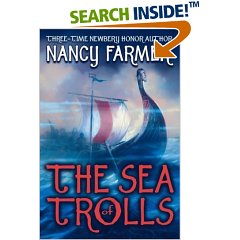
The Sea of Trolls by Nancy Farmer. Read by Gerard Doyle. (Recorded Books)
Well, howdy, blog fans! This is the third in a series of reviews of children's and young adult audiobooks I've listened to recently that I wanted to share with you.
The Sea of Trolls has much to recommend it. It draws heavily on Norse mythology, an Anglo-Saxon epic, and even a famous nursery rhyme to create an exciting fantasy full of action and adventure, memorable characters, fantastic creatures, and exotic landscapes. This otherwise excellent novel for young people, however, is marred by what seems to be the author's philosophical or theological agenda and some rather heavy-handed editorializing. Christianity and the old pre-Christian religions of Europe are constantly compared, and Christianity nearly always seems to come up short.
In a small coastal village in early medieval England there lives a young boy named Jack. The most exciting events in his everyday life are tending sheep, mucking out the barn, and feeling vaguely jealous of his, pampered younger sister Lucy. All that changes one day when the local poet, wise man, and shaman, known simply as "The Bard," recruits Jack to be his apprentice. The Bard begins teaching Jack the ancient lore of bird and beast, flower and field, tree and leaf, river and ocean. In a clever twist, author Farmer imagines that The Bard is the author of the great Anglo-Saxon epic Beowulf, and thereby hangs the plot. The poem tells the story of how the great warrior Beowulf defeated first the monster Grendel and then Grendel's mother, only to be defeated himself many years later by a terrible dragon.
In Farmer's imaginative departure from this tale, it seems Grendel's mother had a sister, the half-human, half-troll princess Frith, and she's still plenty ticked at The Bard for participating in her sister's downfall. Every night she sends out her spirit, a ghastly malevolent phantom, on a night-mare (literally a monstrous eight-legged horse) to destroy The Bard. When that fails, she sends out a fierce band of Vikings under the command of Olaf One-Brow (so named because his bushy blond eyebrows seem to flow continuously over both eyes) to raid Jack's village. Jack and Lucy are captured by Olaf's men, and The Bard, for some strange reason, is reduced to a babbling idiot, seemingly incapable of coming to Jack's aid. An unusually intelligent crow that Jack names Bold Heart appears out of the fog at a crucial moment, however, to accompany Jack and Lucy on their journey.
Jack and Lucy seem destined for a life of cruel slavery, taunted by Thorgil, the "shield-maiden" or female ward of Olaf, who is just a little older than Jack. When Olaf and his men learn Jack has some skill as a wizard and poet, or skald, however, they treat him with more respect and even a trace of fear. Over time, Jack comes to develop a grudging respect for the Northmen and even the tentative beginnings of a friendship with Olaf. After a long sea voyage, Jack and Lucy arrive in the land of Queen Frith and her husband Ivar the Boneless (so named because of his morbid obesity and his utter inability to stand up to his shrewish wife).
When a bit of Jack's poetry in praise of Frith's hair magically and accidentally makes her hair fall out, the queen is outraged. She commands Jack, Thorgil, and Olaf to go on a quest to Jotunheim, or the land of the trolls, in search of water from Mimir's Well. Water from the well will give Jack the knowledge he needs to restore Frith's hair. If Jack and his companions do not return from the quest before the specified deadline, Lucy will be sacrificed to the goddess Freya. If they return in time, Frith will allow Jack and Lucy to go free.
Jack, Thorgil, and Olaf find Jotunheim, but the trolls and other magical creatures in it are not what they expect. Olaf sacrifices his life on the quest, and Jack and Thorgil must each sacrifice something of great importance to gain water from the well. Along the way, Jack learns Thorgil too, was once a slave, and that her real name is Jill. This discovery, and the quest for water from the well, lead to the creation of a famous nursery rhyme (Can you guess which one?) Jack and Thorgil return from Jotunheim with the cure for Frith, but her own greed and arrogance prove her undoing. Olaf's son agrees to return Jack and Lucy to England, and upon his return, Jack even learns the reason for The Bard's strange illness and the true identity of Bold Heart the crow.
At the beginning of this review I mentioned how this otherwise excellent novel is marred by the author's apparent need to compare Christianity to the ancient pre-Christian religions of Europe (and, I suspect, their modern "New Age" or neo-pagan counterparts). Jack's dour father, the local monks, and other overtly Christian characters, are constantly making grim pronouncements about suffering and the will of God. Jack notices that The Bard does not piously cross himself and intone "Amen," when Jack's father makes one of these sententious statements in the way that Jack's family does. In private, The Bard will even exclaim such things as, "May Odin preserve me from such idiocy!" or, "Thank Freya, you're all right." The Bard is a follower of the old ways.
I might be able to take this with a large grain of salt (Coleridge's willing suspension of disbelief and all that), if it weren't for The Bard's inane prattle about "serving the Life Force" that sounds as if it came from a bad early draft of the script of Star Wars. (The Bard does indeed sound like some kind of medieval Obi-wan Kenobi, and as he ranted on and on during these monologues, I half expected him to whip out a lightsaber and announce dramatically, "Jack! I am your father!") When Jack and Thorgil find Mimir's Well, they also find Yggdrasil, the tree of life from Norse mythology. This is a kind of gigantic, earthbound Noah's Ark that shelters every creature on earth and every possible spiritual destination for those creatures--Asgard and Valhalla for Vikings, heaven for Christians, "and other places I don't even know about," Jack explains. It's cool. It's all life, right? Whatever.
For a Christian, there are so many problems with this line of reasoning I hardly know where to begin. In the first place, Christians are not expected to actively seek out suffering (Even Jesus before his crucifixion prayed, "Father, if it be your will, let this cup pass from me"), When (not if) suffering comes, however, Christians are expected to embrace it as the will of God as Christ did. (He also prayed, "Father, not my will, but yours be done"). Christ, however, did not embrace suffering merely for the sake of suffering, but because it was redemptive. Christ's sufferings accomplished his Father's plan of redemption from sin for the whole world. When followers of Christ suffer in imitation of their master, they are called to join their sufferings to the sufferings of Christ (Col. 1: 24) and participate in the work of their own redemption and the redemption of those around them. What Farmer implies, therefore, about the Christian position on suffering is almost a parody or caricature of the truth.
In the second place, for the Christian, life is not an abstract, impersonal "Force" that somehow exists apart from God to be served or worshipped. It is the result of concrete action by a loving and personal God who created all that is (Col. 1: 13-23). Jesus Christ came that we might have life and have it to the full (Jn. 10: 10) for the God of Christians is "not a God of the dead, but of the living" (Lk. 20: 38), and Christ's resurrection from the dead is conclusive proof of God's power over life and death (1 Cor. 15).
Despite all these Scripture references, I don't consider myself some kind of Bible-thumping Fundamentalist. I am, however, a Christian and a Catholic, and over the last year especially, I have struggled with these questions of suffering, life, death, and resurrection. It pains me to see the Christian position distorted in this way, and some kind of neo-pagan alternative peddled to kids under the guise of fiction. I suppose I can be grateful that Farmer didn't insert additional twaddle about "the sacred feminine" á la Dan Brown.
I am also not a Fundamentalist in the sense that I don't become apoplectic any time I see any reference to magic in fantasy fiction, out of some hysterical fear that it will promote the occult. I've read the Harry Potter books, Jeff Smith's comic book epic Bone, the Shannara books of Terry Brooks, and Robert Jordan's Wheel of Time series, all of which use magic with little or no reference to Christianity. I've also read Tolkien's Lord of the Rings and Lewis's Chronicles of Narnia, which are, of course, solidly Christian in their outlook and present Christian truth indirectly, symbolically, and allegorically through the conventions of fantasy. I've even read Katherine Langrish's juvenile novel Troll Fell, which like Farmer's, draws extensively on Norse mythology, but unlike Farmer, without reference to Christianity. Why Farmer felt motivated to engage in this "comparison shopping," or simple-minded relativism is beyond me, unless she has an axe to grind.
Bottom line: If you can overlook the pseudo-religious, pseudo-mystical piffle in this book, read it (or listen to it) and enjoy. If not, there are lots of better fantasy and adventure titles out there that don't have all the questionable baggage.
Saturday, May 20, 2006
The Da Vinci Dud

It's happened. The Da Vinci Code movie is out, and it looks like a big, expensive turkey. Deo gratias.
For weeks now, the Catholic blogosphere has been all atwitter over the impending release of The Da Vinci Code. Sony Pictures waited until the last possible second to let critics see the film, and apparently for good reason. The early reviews are in, and for the most part, they are scathing. The consensus seems to be that it's too long, too talky, and too dull, with too little action and too little chemistry between the male and female leads, Tom Hanks and Audrey Tatou. It could still make a gazillion dollars despite lousy reviews because all the shills and morons who loved the book will just have to see the movie. No accounting for taste, eh? I should perhaps add that I myself have neither read the book nor seen the movie and have no plans to do so. The details of both the book and the movie are all over the internet and TV, so I don't have to waste my time actually reading or seeing this drivel.
I don't suppose we should be too surprised that the movie is a dog, given the source material that director Ron Howard had to work with. In an article published two years ago on the Salon website, Laura Miller called the novel:
a cheesy thriller, with all the familiar qualities of the genre at its worst: characters so thin they're practically transparent, ludicrous dialogue, and prose that's 100 percent cliché. Even by conventional thriller standards, the book isn't particularly good; the plot is simply one long chase sequence, and the "good guy who turns out to be evil" is obviously a ringer from the moment he's introduced.
The film is, of course, an adaptation of Dan Brown's execrable novel of the same name that's been at or near the top of the bestseller lists for about three years now. The novel alleges that Jesus was a man, not a god, that Jesus and Mary Magdalene were married and had children, that Jesus wanted Mary Magdalene, not Peter, to be the head of of the "Jesus movement," that the Roman emperor Constantine cooked up the idea of Jesus's divinity at the Council of Nicaea to shore up imperial power, and that the Big Bad Band of Meanies, the Catholic Church, and its goon squad, the organization called Opus Dei, were created essentially to stomp on anybody who disagreed.
A secret society of intrepid souls, however, known as The Priory of Sion, founded in 1099, and headed at one point by Leonardo Da Vinci, preserved The Real Truth about Christianity and tried to communicate The Real Truth by means of ingenious clues hidden in art and architecture. Brown further asserts that all of the charges made in this book are based on fact and can be discovered by any careful scholar--such as himself. However, as Laura Miller points out in that same Salon article, most of Brown's "painstaking research" appears to be cribbed from a nonfiction book called Holy Blood, Holy Grail that made many of the same claims. The authors of Holy Blood, Holy Grail actually sued Dan Brown for plaigarism in England. The judge ruled in Brown's favor, but made it clear he had contempt for both sides.
Brown's little pile of poppycock has sold about 40 million copies worldwide despite the fact that both secular and religious sources (Catholic and Protestant alike) have conclusively demonstrated that all the claims Brown makes about Jesus, the gospels, and the early church are patently false. The Da Vinci Code is hooey, pure and simple--not just hooey, but badly written hooey to boot. Now the badly written hooey has been translated into a badly written movie. One can only hope that once people can see all this idiocy on the screen in glorious living color, they'll stop and wonder how they were stupid enough to fall for it in the first place.
P. S. Hat Tips to Dawn Eden for the link to Rotten Tomatoes.com, Amy Welborn's Amazon.com blog for the link to the Salon article, her regular Open Book blog for the link to the article by Gary M. Burge, and Clayton Emmer for the link to this fine article by Father Joseph Carola, S. J.
Sunday, May 14, 2006
Bucking the Sarge
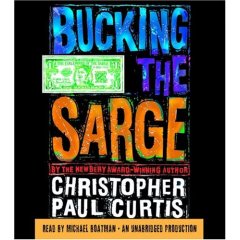
Bucking the Sarge by Christopher Paul Curtis. Read by Michael Boatman. (Listening Library)
This is the second in a series of audiobook reviews I want to share with you. This book is a witty and ironic look at life in contemporary black America that readers of all races can enjoy. For all the laughs, however, there's a serious message to this book. The message seems to be that a corrupt social and economic system--in many cases created and maintained by black people themselves--allows blacks to oppress and exploit other blacks and deny opportunity to all but the most creative and talented African Americans.
Fifteen-year-old Luther T. Farrell lives amid the urban, post-industrial decline of a predominantly black neighborhood in present day Flint, Michigan. Yet Luther is not the typical African-American teen. He is going for his third consecutive win in his middle school science fair, and his life's ambition is to be "America's Best-Known and Best-Loved Philosopher." Embarrassed by a grade school incident in which he mispronounced the name of Socrates, Luther always precedes his borrowed pearls of wisdom with, "A well-known philosopher--whose name escapes me at the moment--once said . . ."
The only obstacle to victory in the science fair is Shayla "I See Dead People" Patrick, the daughter of Flint's most prosperous African-American undertaker, also a straight A student, and the woman Luther has both loved and hated since they were both four years old. In true Tracy-Hepburn fashion, Luther and Shayla are crazy about each other, but dare not admit it, and can't be in the same room together without sparks flying. Luther carries an unused condom in his wallet in case romance should break out, but it looks as though the condom (named Chauncey because it's come to seem like an old friend) will languish in obscurity.
The only obstacle to Luther going on to college and truly starting his philosophical career is his mother--aka "The Sarge." She's a cold, calculating, avaricious woman, who through iron will and ruthless determination has risen from factory worker to school teacher to slum lord, running loan shark rackets, substandard housing projects, and group homes all over the city. She's bilking the system for all it's worth, charging the government for the cost of steak and shrimp, being reimbursed, buying the cheapest food possible for the group homes, and pocketing the difference. Luther has been the "manager" of one of these group homes since he was thirteen, and the Sarge has no intention of releasing him from servitude.
When Luther realizes that his science project--a report on the illegal use of lead-based paint in low-income housing in Flint--has the potential to bring about his mother's downfall, he feels both regret and fear. Regret because The Sarge is, after all, his mother. Fear because The Sarge is, after all, The Sarge. She's not going to be happy that her own son has blown the whistle on her and destroyed her profitable little empire. When Luther discovers that The Sarge has been siphoning off money intended for his college fund, however, he decides to take action and creates his own unique plan for revenge.
Does the Sarge get what's coming to her? Does Luther admit his true feelings to Shayla and vice versa? Does Chauncey see some action? You'll have to read the book. The author's rather blasé attitude about teen sex, and Luther's desire for revenge against his own mother may seem morally problematic to some listeners, but let's face it--they're realistic. What teenager doesn't think about sex, and with today's oversexed, "just use protection" culture, it's easier than ever to turn teen fantasy into reality. And the Sarge is a witch, after all. She's a corrupt authority figure, and the human sense of justice naturally wants to see corrupt authority brought down.
This story is told with so much humor and with tongue so thoroughly in cheek that it's hard to be truly offended by some morally questionable attitudes. There are memorable minor characters such as Luther's best friend Sparky, Marcel the fence and his pit bull Poofy, the shyster lawyer Dante Orlando Gatty (call 1-800-SUE-EM-ALL), and Darnell Dixon, "one of Flint's leading psychopaths." This book makes you laugh and think, and parents and teens may even want to talk about it after listening. Recommended.
Saturday, May 13, 2006
Feed

Feed by M. T. Anderson. Read by David Aaron Baker. (Listening Library)
This is the first in a series of audiobook reviews I wanted to share. In this young adult novel, Anderson presents a devastating satire and cautionary tale about what could happen when the worst tendencies of today's empty-headed, entertainment-obsessed consumerist popular culture are merged with the worst passive, mind numbing, dumbed-down tendencies of emerging information technologies. Titus and his friends, teens of the not-too-distant future, have lived their entire lives with the hardware and software needed to access the next generation of the internet--known simply as "The Feed"--wired directly into their brains. "Everything that happens, happens on the Feed," Titus says.
Feed subscribers are bombarded with a constant stream of images, sounds, and slogans, all promising them one entertainment experience after another, each more fabulous than the last, and all carefully crafted to persuade them to be avid and mindless consumers. The Feed is the first thing they wake up to in the morning and the last thing they hear before going to sleep at night. Entertainment is even more vacuous than it is today (The most popular "feedcast" is a reality show called "Oh. Wow. Thing."), and information, such as it is, is delivered without depth or context. The Feed can be customized for each individual subscriber, isolating individuals from each other in their own computer-generated worlds. Schools, which exist principally for the purpose of creating not-so-smart shoppers, are run by corporations that can replace live teachers with holograms as a cost-cutting measure.
Using the Feed's computer networks, Titus and his friends can have access to practically any piece of information, but this very ease of access and the flood of information at their virtual fingertips has made them hopelessly intellectually lazy. Slang, slogans, and swear words have taken the place of intelligent discourse, and very nearly, of rational thought. Titus and his friends can barely finish a sentence without resorting to a four-letter word of some kind. Some listeners will find this constant profanity offensive, but I believe this is part of the book's overall message and not merely inserted for shock value. Titus and his friends are so intellectually and spiritually blighted by The Feed that they lack the mental and verbal vocabulary to express themselves without resorting to vulgarity."Everyone's super smart now," Titus says, without a trace of irony.
The Feed's omnipresence has blinded Titus and his friends to the collapse of the world around them. His elders can remember when the last forests died and wild animals took refuge in the cities. The landscape is covered with high rises and shopping malls, each with its own artificial environment. Even furniture is disposable. The air is so polluted that green rain falls from black clouds. Children are created artificially in "conceptionariums," and filet mignon is grown on farms where Titus and his girlfriend can wander surrounded by grotesque mazes of meat. Feed subscribers have begun to develop strange hideous lesions and skin diseases, but with a little careful manipulation from the Feed, the lesions can be presented as the latest fashion accessory. Titus and his friends are dimly aware of the emptiness of their lives, but they have been left so intellectually and spiritually stunted by the Feed that they can scarcely conceive of an alternative.
While on vacation with his friends on the moon, which has become a combination tourist trap and garbage dump, Titus meets Violet, a girl different from anyone he has ever encountered. She has been home schooled, can actually write using pen and paper, wears clothes made of wool rather than plastic, and did not have the Feed installed in her brain until she was seven years old. She resists and confounds The Feed by asking about the most bizarre and unrelated consumer products she can imagine and then not buying any of them, thus preventing The Feed's computers from profiling and categorizing her. A romance between Titus and Violet begins but is not to last. Titus and his friends are attacked by a hacker, forcing them to be temporarily disconnected from the Feed. In most cases this leads only to a few days of anxiety and disorientation, but because Violet had her Feed installed much later in life, the consequences are more severe. Over time, her Feed hardware and software malfunction more and more severely, until finally it becomes clear she will die. Violet's death forces Titus to emerge from his shell of self-absorption and self-indulgence and take up her resistance to The Feed. The last words of the book, the advertising slogan, "Everything must go!" take on a whole new meaning now that Titus has seen the Feed for what it truly is.
The book mirrors perfectly the disgust and revulsion I've come to feel with much of pop culture today, the feelings that led me to give up TV for Lent. I see many of the same feelings expressed by the Catholic bloggers and commentators I read. I don't know M. T. Anderson's religious views, if any, but I suspect he is a secularist, since he doesn't seem to offer any kind of spiritual solution to the soul-killing emptiness of his world. Yet it does seem to me that when both religious and secular critics are pointing out the emptiness and sickness of much of our culture, you know we've got a problem. This outstanding book is a searing indictment of some of the worst aspects of today's society that technology-savvy mall rats and their parents should read before the grim prophecies of this book come true. As Titus might say, "Unit! Feed is like . . . meg brag!"
Heard Any Good Books Lately?
If anybody besides me reads this blog (a doubtful prospect, since I've gotten a grand total of ONE non-spam comment), they know that I love audiobooks. They're one step closer to pure storytelling since all the listener has to convey character, action, setting, and mood are the reader's voice and his own imagination. I also like them for the practical reason that you can listen to them while doing other things: riding in the car, eating dinner, doing the dishes, getting dressed, etc.
During my TV-free Lent I listened to two audiobooks for teens that I thought were really good--one quite extraordinary in fact. I often think that the stuff being published for kids and teens today is far more interesting than the stuff being published for adults. The novelist Martin Amis said as much in an article I read about ten years ago when I was still in library school. He complained that there was far too much self-consciously literary fiction being written in a needlessly artsy style in which dull little characters struggled through their dull little lives, wrestled with their existential angst, and wondered about The Meaning Of It All. He argued that if a writer was interested solely in creating good characters and telling a good story he would almost have to write for children. Children don't care about exquisitely crafted prose, pretentious literary allusions, or characters struggling to find Meaning in their lives, he said. (Perhaps teens do want to find meaning, and in fact I think that's the subject of one of the books I want to review below, but I think the substance of his argument holds true). What children and teens want most are solid, believable, interesting characters and compelling stories. Speaking only for myself I can say that many adults want them too. With that in mind, I want to devote the next several posts to the following audiobooks I've listened to recently.
During my TV-free Lent I listened to two audiobooks for teens that I thought were really good--one quite extraordinary in fact. I often think that the stuff being published for kids and teens today is far more interesting than the stuff being published for adults. The novelist Martin Amis said as much in an article I read about ten years ago when I was still in library school. He complained that there was far too much self-consciously literary fiction being written in a needlessly artsy style in which dull little characters struggled through their dull little lives, wrestled with their existential angst, and wondered about The Meaning Of It All. He argued that if a writer was interested solely in creating good characters and telling a good story he would almost have to write for children. Children don't care about exquisitely crafted prose, pretentious literary allusions, or characters struggling to find Meaning in their lives, he said. (Perhaps teens do want to find meaning, and in fact I think that's the subject of one of the books I want to review below, but I think the substance of his argument holds true). What children and teens want most are solid, believable, interesting characters and compelling stories. Speaking only for myself I can say that many adults want them too. With that in mind, I want to devote the next several posts to the following audiobooks I've listened to recently.
Saturday, April 29, 2006
Adventures in Downloading
In a post from last year I discussed the joys of finding music from the 1930s and '40s using LimeWire and iTunes. Since then, I've gone even further back, discovering Celtic tunes and especially the polyphonic liturgical music of Thomas Tallis (1505-1585), William Byrd (1543-1623), and Giovanni Pierluigui de Palestrina (1526-1594). I first sang Palestrina years ago while in the choir of another parish I attended, and I first heard Tallis and Byrd on a public radio classical music show some years later. When I discovered I could find just about anything using LimeWire and iTunes, I jumped at the chance to find some of this great music. It makes the contemporary Catholic music of the St. Louis Jesuits and Marty Haugen, whom I had previously admired, sound rather penny ante by comparison. The trouble with Tallis, Byrd, Palestrina, et al., however, is that you need a large choir of well trained singers to sound good. Almost anybody can sing SLJ, Marty Haugen, David Haas, Carey Landry (gag!), and the like.
One of the things I admire most about Tallis and Byrd is that they were English Catholics in a time when an English Catholic was a dicey thing to be. Both Tallis and Byrd were well-connected socially and politically and could have easily advanced themselves by becoming Anglicans, but they chose to remain Catholics, a choice that could get them arrested, jailed, executed, or deported if they weren't careful. I believe Tallis and Queen Elizabeth reached a sort of "understanding" that Tallis could continue composing music for the Roman Catholic liturgy in Latin if he also composed music for the Church of England in English. Naturally, I have a soft spot for the Catholic stuff in Latin. Gotta get one of his albums on CD! But which one?
I gave up TV for Lent because I became disgusted with all negativism behind much of the programming and advertising. Although there are some good shows out there, as I said in my Star Trek post, most of what's on TV today is trash. If "Survivor" and its ilk are considered "reality TV" I'll take good old-fashioned unreality any day. You put total strangers in a completely artificial, contrived situation, follow them around with cameras hoping they'll do something dishonest or perverted in order to win the game, and call that "reality?" No thanks. Cop shows push the message that the world is full of serial killers, drug dealers, terrorists, rapists, and perverts. Advertising constantly pushes the message that what you need to be happy in life is to buy more stuff. If you buy the right stuff, you will have more sex and be happy. Anyone with half a brain and half a heart knows this is false, but people like me who live alone continue to watch TV because the light, motion, color, and sound create the illusion that there are others with you. They create the illusion that you are not alone.
I turned off the TV, but I was still uncomfortable with the silence in the evening. I discovered Catholic internet podcasts as an alternative to the inane jabber of TV. I've become a podcast junkie. My favorite has to be the Rosary Army with Greg and Jennifer Willitts. They make and give away rosaries made from twine and teach others to do the same. Their podcasts are obviously about the rosary, but they also talk candidly about their day to day adventures and struggles of trying to maintain a home and a family in today's world. In the past year, they've tried unsucessfully to sell their house, Greg has lost his job and taken another one, Jennifer had a miscarriage, one of their sons has been diagnosed with autism, and another with epilepsy. Yet they have tried to face all these trials with humor and faith. Occasionally, they'll do skits featuring their original Catholic superheroes Captain Catechism and Merry Medal. Listening to one of their shows is like spending a few minutes with your pleasantly crazy Catholic neighbors from down the block.
Runner-up for my favorite podcast is Mark Shea's Rock Solid. These are daily 5 to 7 minute reflections on some aspect of history or culture and how they relate to the Catholic faith. His favorite tactic is to find something significant in history that happened on the date of the podcast and use it as a springboard for reflection. The guy must scour Chase's Calendar of Events or The Catholic Almanac looking for material!
I also listen occasionally to The Daily Breakfast with Father Roderick, a priest from the Diocese of Utrecht in the Netherlands. I'm not as enthusiastic about this show. Father Roderick is a young priest (from the photo on his website, I'd say early 40s, tops) and he is plainly trying to reach teens, twentysomethings, and thirtysomethings with this show. He speaks very colloquial, idiomatic English, plays new pop music, and talks a lot about movies, TV, computers, and video games. Along the way, he sneaks in information and commentary about the Catholic Church.
I don't know how I feel about this. On the one hand, it's good that a priest is trying to talk to young people (I sound like such an old fuddy-duddy when I say that. "You young people should turn that noise down! My goodness! What's the world coming to?") about things they care about and are interested in. They need to hear the voice of Christ amid all the yammering that is pop culture. On the other hand, if I want to know about the latest in pop culture there are any number of secular sources I can go to for that information. Why do I want to hear about it from a priest? What I want to hear from a priest is what a priest should know best: How I can know Christ and love Him and serve Him better? I think I'd enjoy Father Roderick more if he had less pop culture chitchat and more clearly Catholic stuff.
There you have it, friends. My thoughts on TV, podcasting, and pop culture. This concludes this test of the Emergency Ranting System. We now return you to your regularly scheduled lives.
One of the things I admire most about Tallis and Byrd is that they were English Catholics in a time when an English Catholic was a dicey thing to be. Both Tallis and Byrd were well-connected socially and politically and could have easily advanced themselves by becoming Anglicans, but they chose to remain Catholics, a choice that could get them arrested, jailed, executed, or deported if they weren't careful. I believe Tallis and Queen Elizabeth reached a sort of "understanding" that Tallis could continue composing music for the Roman Catholic liturgy in Latin if he also composed music for the Church of England in English. Naturally, I have a soft spot for the Catholic stuff in Latin. Gotta get one of his albums on CD! But which one?
I gave up TV for Lent because I became disgusted with all negativism behind much of the programming and advertising. Although there are some good shows out there, as I said in my Star Trek post, most of what's on TV today is trash. If "Survivor" and its ilk are considered "reality TV" I'll take good old-fashioned unreality any day. You put total strangers in a completely artificial, contrived situation, follow them around with cameras hoping they'll do something dishonest or perverted in order to win the game, and call that "reality?" No thanks. Cop shows push the message that the world is full of serial killers, drug dealers, terrorists, rapists, and perverts. Advertising constantly pushes the message that what you need to be happy in life is to buy more stuff. If you buy the right stuff, you will have more sex and be happy. Anyone with half a brain and half a heart knows this is false, but people like me who live alone continue to watch TV because the light, motion, color, and sound create the illusion that there are others with you. They create the illusion that you are not alone.
I turned off the TV, but I was still uncomfortable with the silence in the evening. I discovered Catholic internet podcasts as an alternative to the inane jabber of TV. I've become a podcast junkie. My favorite has to be the Rosary Army with Greg and Jennifer Willitts. They make and give away rosaries made from twine and teach others to do the same. Their podcasts are obviously about the rosary, but they also talk candidly about their day to day adventures and struggles of trying to maintain a home and a family in today's world. In the past year, they've tried unsucessfully to sell their house, Greg has lost his job and taken another one, Jennifer had a miscarriage, one of their sons has been diagnosed with autism, and another with epilepsy. Yet they have tried to face all these trials with humor and faith. Occasionally, they'll do skits featuring their original Catholic superheroes Captain Catechism and Merry Medal. Listening to one of their shows is like spending a few minutes with your pleasantly crazy Catholic neighbors from down the block.
Runner-up for my favorite podcast is Mark Shea's Rock Solid. These are daily 5 to 7 minute reflections on some aspect of history or culture and how they relate to the Catholic faith. His favorite tactic is to find something significant in history that happened on the date of the podcast and use it as a springboard for reflection. The guy must scour Chase's Calendar of Events or The Catholic Almanac looking for material!
I also listen occasionally to The Daily Breakfast with Father Roderick, a priest from the Diocese of Utrecht in the Netherlands. I'm not as enthusiastic about this show. Father Roderick is a young priest (from the photo on his website, I'd say early 40s, tops) and he is plainly trying to reach teens, twentysomethings, and thirtysomethings with this show. He speaks very colloquial, idiomatic English, plays new pop music, and talks a lot about movies, TV, computers, and video games. Along the way, he sneaks in information and commentary about the Catholic Church.
I don't know how I feel about this. On the one hand, it's good that a priest is trying to talk to young people (I sound like such an old fuddy-duddy when I say that. "You young people should turn that noise down! My goodness! What's the world coming to?") about things they care about and are interested in. They need to hear the voice of Christ amid all the yammering that is pop culture. On the other hand, if I want to know about the latest in pop culture there are any number of secular sources I can go to for that information. Why do I want to hear about it from a priest? What I want to hear from a priest is what a priest should know best: How I can know Christ and love Him and serve Him better? I think I'd enjoy Father Roderick more if he had less pop culture chitchat and more clearly Catholic stuff.
There you have it, friends. My thoughts on TV, podcasting, and pop culture. This concludes this test of the Emergency Ranting System. We now return you to your regularly scheduled lives.
Still Trekkin' After All These Years
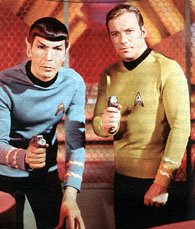
Via Catholic Ragemonkey, I learned that Paramount Studios is developing an eleventh (Yes, eleventh!) big screen Star Trek movie produced, and possibly directed by J. J. Abrams, creator and producer of the TV series Alias and Lost. I also learned that this year is the 40th (yes, 40th) anniversary of the Star Trek fanchise.
In my humble opinion, Abrams seems to be a good fit for the project. "Star Trek" and "Lost" have many similarities. Both shows feature a diverse group of people thrown together in a strange environment, strugging to survive and work together for the common good, and along the way learning about "the big questions:" the nature of good and evil, the reality of sin and redemption, and the meaning of life and death. Almost anybody would be better than the team of Rick Berman and Brannon Braga who gave us the anemic "Voyager" series, the downright pathetic "Enterprise" series, and the absolutely atrocious "Nemesis" movie. Ironically, B&B are capable of writing good Trek, because they gave us "First Contact," which, in my opinion, is the best of the big screen efforts featuring the cast of "The Next Generation."
Reportedly, the proposed story is a kind of "Kirk and Spock: The Early Years" vehicle, focusing on the first meeting of the two legendary heroes of Trekdom. This type of story has a lot of potential if it's done right. Paramount tried a sort of retro-Trek project with "Enterprise," but it was so abominable I gave up on it after the third season. I was so disgusted with "Enterprise" that I decided to try my hand at imagining the early days of the Star Trek universe, and I've been working sporadically for several years now on a story of my own featuring Zefram Cochrane and taking place immediately after the events of "First Contact." It's languished unfinished on my hard drive for quite a while now, mostly because I feared it would take a novel to adequately resolve the story, but I may give it another whack. I can't seem to just leave it alone. I've also written a couple of original Trek stories that you can find here and here.
Besides the poor quality of recent output from The Powers That Be at Paramount, the other thing that's diminished my enthusiasm for Trekdom is confirmation of my long held suspicion that Gene Roddenberry, Star Trek's creator, was an atheist. In one of his recent "Rock Solid" podcasts, Mark Shea quoted Roddenberry denouncing religion. I'm disappointed but not surprised. It wouldn't take a pointy-eared Vulcan science officer to figure out that the Great Bird of the Galaxy took a dim view of matters religious. In several episodes of all the various Trek series and movies, our intrepid heroes meet various strange beings with apparently godlike powers only to find that the beings are only super-advanced life-forms of one sort or another. The Enterprise-D has a ship's shrink, but not a ship's chaplain. Yet Star Trek, at its best, continues to appeal to people precisely because it touches on moral, ethical, and spiritual issues. Roddenberry's sci-fi universe is just as Christ-haunted as the rest of our postmodern world.
Gulp! Part II
The printer and Quicken software I ordered last weekend arrived on Wednesday. Would you believe they didn't include the cable to connect the printer to the computer or a black ink cartridge? Since when are things that are essential to operate a piece of equipment considered "accessories?" I always thought accessories were non-essesntials, things it would be nice to have, but not required to use a product. Sheesh! Fortunately, I had ordered a black ink cartridge separately, but I had to send a friend of mine to Wal-Mart for a cable. Now I have no excuses. I can print to my heart's content, but I also have to get my finances under control. It ain't gonna be pretty.
Saturday, April 22, 2006
Benedetto! Benedetto!
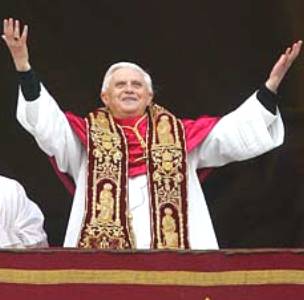
Many around the Catholic blogsphere (Amy Welborn, Mark Shea, Catholic Ragemonkey, for example) have noted that this week marks the first anniversary of the former Joseph Cardinal Ratzinger's elevation to the Chair of Peter and his taking the name Benedict XVI. I remember watching television as the networks interrupted regular programming to announce that a new pope had been elected. The news people reported that there were groups of people in St. Peter's square waving various national flags and hoping somebody from their country had been chosen. When it was announced that Cardinal Ratzinger, a German, had been selected and had chosen the name Benedict XVI, the Italians, far from being disappointed, obligingly began chanting "Benedetto! Benedetto! Benedetto!" Love for the pope apparently trumped national pride.
The death of Pope John Paul II was a particularly difficult time for me because it followed hard on the heels of my own father's death less than two months before. I had just lost my earthly or natural father. Suddenly I felt I was losing a spiritual father, too. As if that weren't bad enough, I was already having a crisis of faith because of unanswered questions about Scripture, serious health problems of my own, and the end of a precious personal relationship. Everything that was once so clear now seemed uncertain. I felt lost, alone, worthless. Where was God?
Yet the homily that Pope Benedict delivered at his installation Mass (in which he received the pallium and fisherman's ring, two symbols of the pope's office) was an enormous comfort to me. In it, Benedict spoke candidly about his own feelings of loss and loneliness after the death of John Paul and his anxiety at being called to the awesome responsibility of leading the Church. Yet of John Paul he said this:
He crossed the threshold of the next life, entering into the mystery of God. But he did not take this step alone. Those who believe are never alone--neither in life nor in death. At that moment, we could call upon the Saints from every age--his friends, his brothers and sisters in the faith--knowing that they would form a living procession to accompany him into the next world, into the glory of God. We knew that his arrival was awaited. Now we know that he is among his own and is truly at home.
When I read those words, I knew they were true not only of John Paul but of my Dad as well. Yet Benedict went on to say:
I too can say with renewed conviction: I am not alone. I do not have to carry alone what in truth I could never carry alone. All the Saints of God are there to protect me, to sustain me and to carry me. And your prayers, my dear friends, your indulgence, your love, your faith and your hope accompany me. Indeed, the communion of Saints consists not only of the great men and women who went before us and whose names we know. All of us belong to the communion of Saints, we who have been baptized in the name of the Father, and of the Son and of the Holy Spirit, we who draw life from the gift of Christ's Body and Blood, through which he transforms us and makes us like himself.
Did I dare hope that those words were true for me too? I felt lost, alone, and worthless. Yet the Holy Father reminded me that I did not have to feel this way:
The human race--every one of us--is the sheep lost in the desert which no longer knows the way. The Son of God will not let this happen; he cannot abandon humanity in so wretched a condition. He leaps to his feet and abandons the glory of heaven, in order to go in search of the sheep and pursue it, all the way to the Cross. He takes it upon his shoulders and carries our humanity; he carries us all--–he is the good shepherd who lays down his life for the sheep. What the Pallium indicates first and foremost is that we are all carried by Christ.
Benedict continued:
We are not some casual and meaningless product of evolution. Each of us is the result of a thought of God. Each of us is willed, each of us is loved, each of us is necessary. There is nothing more beautiful than to be surprised by the Gospel, by the encounter with Christ. There is nothing more beautiful than to know Him and to speak to others of our friendship with Him.
The pope continued:
At this point, my mind goes back to 22 October 1978, when Pope John Paul II began his ministry here in Saint Peter’s Square. His words on that occasion constantly echo in my ears: “Do not be afraid! Open wide the doors for Christ!"
I was feeling afraid of God at this point. If I trusted Him, what else was he going to zap me with? Again, the pope spoke:
Are we not perhaps all afraid in some way? If we let Christ enter fully into our lives, if we open ourselves totally to him, are we not afraid that He might take something away from us? Are we not perhaps afraid to give up something significant, something unique, something that makes life so beautiful? Do we not then risk ending up diminished and deprived of our freedom? And once again the Pope said: No! If we let Christ into our lives, we lose nothing, nothing, absolutely nothing of what makes life free, beautiful and great. No! Only in this friendship are the doors of life opened wide. Only in this friendship is the great potential of human existence truly revealed. Only in this friendship do we experience beauty and liberation. And so, today, with great strength and great conviction, on the basis of long personal experience of life, I say to you, dear young people: Do not be afraid of Christ! He takes nothing away, and he gives you everything. When we give ourselves to him, we receive a hundredfold in return. Yes, open, open wide the doors to Christ--–and you will find true life. Amen.
Amen and Amen! This homily helped restore my faith in a loving God. Indeed, it had so many passages that spoke so directly to my situation at the time, I'll swear it could have been written for me. Thank you, Holy Father.
Before Cardinal Ratzinger was elected, his critics dubbed him "Der PanzerKardinal" or "God's Rottweiler" because he was head of the Congregation of the Doctrine of the Faith, the agency responsible for defining and maintaining correct Catholic doctrine. He had a reputation, largely defined by his critics, as a fierce, narrow-minded opponent of anything remotely perceived as heresy or heterodoxy. Yet these are not the words of a narrow-minded uncharitable zealot. In fact, Pope Benedict surprised his critics by focusing his first encyclical, "Deus Caritas Est," (God Is Love) on the importance of charity in the Christian life. Pundits have remarked on Benedict's reserved, scholarly, quiet and unassuming manner, very much in contrast to John Paul II, with his actor's flair for the grand dramatic gesture.
Catholics are encouraged to think of the pope as a father figure, of course, but it occurs to me that a better metaphor might be a grandfather. Now that I've had a year to get to know Benedict, I can see some of the differences between him and his predecessor. John Paul was the grandfather who comes with hugs and jokes and presents, naturally warm and expressive. You know he loves you because he shows it so openly and easily. Benedict, perhaps, is like your other grandfather, who is quiet and not really comfortable with public displays of affection. Yet when no one is looking, he might slip you a shy smile or place a gentle hand on your shoulder. Because you know he's not likely to do anything extravagant, that small, simple gesture really means a lot. You know he loves you just as much as your other grandpa does, but he merely shows it differently. Your two grandfathers are two different men with two different styles, but you are grateful to God for both of them. Ad multos annos!
Gulp!
I just took the plunge and ordered a printer for my computer and an upgraded version of Quicken for Mac. Not being able to print anything at home--Legion of Mary documents, fiction, or letters, for example--was a nuisance, and the old version of Quicken, which ran under a different version of the operating system, was causing problems. It's exciting but also a little scary. Will everything work? Did I spend too much money? I don't believe these were frivolous items, but still it makes me nervous.
Sunday, April 16, 2006
Long Time No Blog
I'M BAAAAAAACK!
Yeah, yeah, I know. Long time no blog. Why was I silent for so long, you might ask? Call it Seasonal Affective Disorder, winter blues, whatever. I've had problems with depression for years, and it's always worse in the fall and winter months. Early in November, shortly after my last post, I slid into a pretty deep funk from which I am only now emerging. In recent days and weeks, as the days got longer and the temperatures got warmer, I felt something switching on inside, something coming back to life.
Part of the reason I fell silent was embarrassment and discouragement from the huge pile of still unpaid doctor and hospital bills from my medical adventures last spring. With something switching on, something coming back to life, I am resolved to take advantage of the momentum and get my finances in order.
Another big downer was my continuing dissatisfaction with my job as a librarian in rural South Carolina. My unhappiness grew and my performance dwindled until finally my boss issued an ultimatum: shape up or ship out. That brought me up short. I was forced to take a hard look at my attitude about the job, and I realized I could not afford to continue the whiny, prideful, condescending attitude I had developed. I had essentially convinced myself that the task was beneath my abilities, intelligence, and dignity, and I really didn't have to do it. This was nonsense, of course. No one owed me this job. It was not mine by right. In fact, I owed myself, my coworkers, and my boss, who had been more patient with me than I deserved, the best performance I could give every day. It's still a struggle because I find myself thinking of things I'd rather be doing, but I am trying to do better.
In November, I joined The Legion of Mary, an apostolate or organization within the Catholic Church dedicated to fostering devotion to Christ and His Blessed Mother primarily through works of charity and prayer, principally the Rosary. I've had a great devotion to the Rosary for years now because of the rhythm or meditative "zone" one falls into while praying it. Even when I felt most alienated from God because of all the disasters of last spring, I was still able to say the Rosary, still able to approach Jesus through Mary. All of the Legion's literature speaks of doing everything for the glory of God and the honor of Mary and imitating Mary's charity and humility. In a moment of insight, I had an image of myself offering my day to Jesus and Mary. If I were going to give my earthly mother a gift, I wouldn't give her a wadded up Kleenex or a greasy piece of cardboard. I'd want to give her the best I could possibly afford. If that's true for my earthly, biological mom, how much more so for my heavenly, spiritual mother. Now I say the Morning Offering before beginning work, and it helps.
Now that I'm feeling better, I have the urge to write again, and this blog seems one avenue in which to do it. I've been surfing around the Catholic blogsphere for about a year now (check out the additions to the blogroll on the left), and I wonder why Amy Welborn and Mark Shea get to have all the fun. I have blogworthy thoughts too, don't I? Easter Sunday seems the perfect time to (ahem) resurrect my blog.
I really should toddle off to bed now. I shall endeavor to be a more conscientious blogger and regularly share my VAST wisdom and profound humility (please stifle those snorts of derisive laughter) with you, the good people of cyberspace.
Happy Easter! He is Risen! He is Risen Indeed!
Yeah, yeah, I know. Long time no blog. Why was I silent for so long, you might ask? Call it Seasonal Affective Disorder, winter blues, whatever. I've had problems with depression for years, and it's always worse in the fall and winter months. Early in November, shortly after my last post, I slid into a pretty deep funk from which I am only now emerging. In recent days and weeks, as the days got longer and the temperatures got warmer, I felt something switching on inside, something coming back to life.
Part of the reason I fell silent was embarrassment and discouragement from the huge pile of still unpaid doctor and hospital bills from my medical adventures last spring. With something switching on, something coming back to life, I am resolved to take advantage of the momentum and get my finances in order.
Another big downer was my continuing dissatisfaction with my job as a librarian in rural South Carolina. My unhappiness grew and my performance dwindled until finally my boss issued an ultimatum: shape up or ship out. That brought me up short. I was forced to take a hard look at my attitude about the job, and I realized I could not afford to continue the whiny, prideful, condescending attitude I had developed. I had essentially convinced myself that the task was beneath my abilities, intelligence, and dignity, and I really didn't have to do it. This was nonsense, of course. No one owed me this job. It was not mine by right. In fact, I owed myself, my coworkers, and my boss, who had been more patient with me than I deserved, the best performance I could give every day. It's still a struggle because I find myself thinking of things I'd rather be doing, but I am trying to do better.
In November, I joined The Legion of Mary, an apostolate or organization within the Catholic Church dedicated to fostering devotion to Christ and His Blessed Mother primarily through works of charity and prayer, principally the Rosary. I've had a great devotion to the Rosary for years now because of the rhythm or meditative "zone" one falls into while praying it. Even when I felt most alienated from God because of all the disasters of last spring, I was still able to say the Rosary, still able to approach Jesus through Mary. All of the Legion's literature speaks of doing everything for the glory of God and the honor of Mary and imitating Mary's charity and humility. In a moment of insight, I had an image of myself offering my day to Jesus and Mary. If I were going to give my earthly mother a gift, I wouldn't give her a wadded up Kleenex or a greasy piece of cardboard. I'd want to give her the best I could possibly afford. If that's true for my earthly, biological mom, how much more so for my heavenly, spiritual mother. Now I say the Morning Offering before beginning work, and it helps.
Now that I'm feeling better, I have the urge to write again, and this blog seems one avenue in which to do it. I've been surfing around the Catholic blogsphere for about a year now (check out the additions to the blogroll on the left), and I wonder why Amy Welborn and Mark Shea get to have all the fun. I have blogworthy thoughts too, don't I? Easter Sunday seems the perfect time to (ahem) resurrect my blog.
I really should toddle off to bed now. I shall endeavor to be a more conscientious blogger and regularly share my VAST wisdom and profound humility (please stifle those snorts of derisive laughter) with you, the good people of cyberspace.
Happy Easter! He is Risen! He is Risen Indeed!
He Is Risen!

Rejoice, Heavenly Powers! Sing, Choirs of Angels!
Exult all creation around God's Throne!
Jesus Christ your King is Risen!
Sound the trumpet of salvation!
Rejoice, O Earth, in shining splendor,
Radiant in the brightness of your King.
Christ has conquered, glory fills you,
Darkness vanishes forever.
Rejoice, O Mother church! Exult in glory!
The Risen Savior shines upon you!
Let this place resound with joy,
Echoing the mighty song of all God's people.
--Easter Proclamation
Friday, October 28, 2005
So Long for Now, Harry
I recently finished the audio version of Harry Potter and the Half Blood Prince, the most recent book in the Harry Potter series, Now I, like millions of other HP fans around the world, will have to wait expectantly for the next and possibly final book in the series. J. K. Rowling has said in interviews that she plans to stop the series at seven but she has also left the door open to the possibility of more books if she really feels motivated to do them. My brother Bill remarked that she's probably getting considerable pressure from her publishers for more books, and that might be sufficient motivation. We'll see, won't we? I wonder what she's going to do afterwards. She's probably made enough money that if she never wrote another word after Book 7, she could live quite comfortably on royalties, tie-ins, endorsements, and the like, but I can't see her doing that. She's obviously a highly talented and creative person who's only just turned 40, I believe. I know from my own limited experience as a fiction writer that really creative people aren't content to simply rest on their laurels. We always want to move on to the next project.
As for Book 6 itself, the violence and bloodshed that was foreshadowed at the end of Book 5 did indeed occur. This time, Lord Voldemort's followers, the Death Eaters, came to Hogwarts itself, and the battle cost the life of Harry's beloved mentor and headmaster, Professor Dumbledore. Harry's old nemesis, Draco Malfoy, was responsible for letting the Death Eaters into Hogwarts but couldn't bring himself to kill Dumbledore when he had the chance. That villainous task was left to Professor Snape, the other bane of Harry's existence, whose reputation as a reformed or repentant Death Eater was revealed to be a sham. With Dumbledore dead and the future of Hogwarts in doubt, Harry has resolved to set off alone in search of the four horcruxes, or pieces of Voldemort's soul that are hidden throughout the world, and may be the only means of defeating the evil wizard. Ron and Hermione, Harry's two best friends, are resolved to go with him, however. Meanwhile, the Ministry of Magic, under the direction of a new Minister, is still trying to manipulate Harry for its own reasons.
By way ofAmy Wellborn's blog, I found an interesting article in The American Spectator Online that questioned whether Harry is such a splendid moral example for young people because of his lust for revenge and his frequent tendency to lie and bully others when it suits his purposes. I can't quite make up my mind about this. On the one hand, while Harry's behavior is not always morally admirable, it is realistic and sympathetic. I dare say most of us could imagine ourselves behaving in a similar way under similar circumstances. If Harry lies and bullies occasionally, Rowling seems to be saying, it is in part because he is the victim of lying and bullying himself--at the hands of Dudley, Draco, Snape, or Umbrage, for example--and at some primitive level, it is awfully satisfying to see these obnoxious characters get what they deserve. Because of our sinful nature, Christ's command to turn the other cheek doesn't come easily. We're much more comfortable with an eye for an eye. We want revenge, but we often confuse it with justice.
On the other hand, The Spectator article does, however, point out what I think is the chief flaw in the Harry Potter books. I think the whole Harry Potter series, as enjoyable as it is, falls short of say, The Lord of The Rings, precisely because the Harry Potter series is essentially a giant revenge story. Voldemort killed Harry's parents, his godfather, and his mentor. Harry wants to kill Voldemort. Draco and Snape torment Harry. Harry wants to torment them. We're told that Voldemort wants to take over the whole wizarding world, that this would a bad thing, and that this would affect even the "muggle" (non-magical, ordinary, everyday) world, but we don't have a clear sense of what's at stake if Voldemort takes over.
Frodo, by contrast with Harry, has never been personally wronged by Sauron. He wants nothing more than to live the peaceful, quiet comfortable life of a wealthy, middle-aged gentlehobbit at Bag End, but Fate (Destiny, Providence) in the person of Gandalf seems to have other ideas. Gandalf makes it clear to Frodo from the very beginning of the quest that if Sauron finds the ring it will be the end of everything and everyone Frodo loves--the hobbits of the Shire, the elves of Rivendell and Lothlorien, the dwarves of the mountains, the men of Gondor--all of Middle Earth is at risk. Frodo is fighting for something beyond his own narrow self-interest, but he's willing to take on the fight because he knows it's the right thing to do.
Furthermore, as Frodo himself points out, he's not a wizard or a warrior or a powerful person. He's literally and figuratively a tiny person from an obscure corner of Middle Earth who has to rely on the magical abilities of others--Gandalf and the elves, to be precise--rather than any abilities he himself possesses. I've always thought it was a brilliant stroke of Tolkien's to portray the hobbits as "halflings," well under five feet tall. It's an excellent way of symbolizing just how ordinary, how small, how inadequate humans can feel in the face of some huge, terrible, seemingly overwhelming crisis. Yet Frodo faces his crisis with his wits and his courage, aided at key moments by the supernatural power of magical objects--elven waybread or lembas and Galadriel's star glass, for example.
In a similar way, I'm sure Tolkien the Catholic would argue that we humans have to face crises with courage and wit aided by grace available in and through the sacraments. Even though Tolkien insisted he hated allegory, it doesn't take a genius to see lembas as a symbol for the Eucharist. Galadriel's star glass could be a symbol for anything from the light of faith to the chrism that's used at baptism and confirmation. Tolkien's world is in the end deeper and richer than Rowling's. I like Harry, but I love Frodo.
As for Book 6 itself, the violence and bloodshed that was foreshadowed at the end of Book 5 did indeed occur. This time, Lord Voldemort's followers, the Death Eaters, came to Hogwarts itself, and the battle cost the life of Harry's beloved mentor and headmaster, Professor Dumbledore. Harry's old nemesis, Draco Malfoy, was responsible for letting the Death Eaters into Hogwarts but couldn't bring himself to kill Dumbledore when he had the chance. That villainous task was left to Professor Snape, the other bane of Harry's existence, whose reputation as a reformed or repentant Death Eater was revealed to be a sham. With Dumbledore dead and the future of Hogwarts in doubt, Harry has resolved to set off alone in search of the four horcruxes, or pieces of Voldemort's soul that are hidden throughout the world, and may be the only means of defeating the evil wizard. Ron and Hermione, Harry's two best friends, are resolved to go with him, however. Meanwhile, the Ministry of Magic, under the direction of a new Minister, is still trying to manipulate Harry for its own reasons.
By way ofAmy Wellborn's blog, I found an interesting article in The American Spectator Online that questioned whether Harry is such a splendid moral example for young people because of his lust for revenge and his frequent tendency to lie and bully others when it suits his purposes. I can't quite make up my mind about this. On the one hand, while Harry's behavior is not always morally admirable, it is realistic and sympathetic. I dare say most of us could imagine ourselves behaving in a similar way under similar circumstances. If Harry lies and bullies occasionally, Rowling seems to be saying, it is in part because he is the victim of lying and bullying himself--at the hands of Dudley, Draco, Snape, or Umbrage, for example--and at some primitive level, it is awfully satisfying to see these obnoxious characters get what they deserve. Because of our sinful nature, Christ's command to turn the other cheek doesn't come easily. We're much more comfortable with an eye for an eye. We want revenge, but we often confuse it with justice.
On the other hand, The Spectator article does, however, point out what I think is the chief flaw in the Harry Potter books. I think the whole Harry Potter series, as enjoyable as it is, falls short of say, The Lord of The Rings, precisely because the Harry Potter series is essentially a giant revenge story. Voldemort killed Harry's parents, his godfather, and his mentor. Harry wants to kill Voldemort. Draco and Snape torment Harry. Harry wants to torment them. We're told that Voldemort wants to take over the whole wizarding world, that this would a bad thing, and that this would affect even the "muggle" (non-magical, ordinary, everyday) world, but we don't have a clear sense of what's at stake if Voldemort takes over.
Frodo, by contrast with Harry, has never been personally wronged by Sauron. He wants nothing more than to live the peaceful, quiet comfortable life of a wealthy, middle-aged gentlehobbit at Bag End, but Fate (Destiny, Providence) in the person of Gandalf seems to have other ideas. Gandalf makes it clear to Frodo from the very beginning of the quest that if Sauron finds the ring it will be the end of everything and everyone Frodo loves--the hobbits of the Shire, the elves of Rivendell and Lothlorien, the dwarves of the mountains, the men of Gondor--all of Middle Earth is at risk. Frodo is fighting for something beyond his own narrow self-interest, but he's willing to take on the fight because he knows it's the right thing to do.
Furthermore, as Frodo himself points out, he's not a wizard or a warrior or a powerful person. He's literally and figuratively a tiny person from an obscure corner of Middle Earth who has to rely on the magical abilities of others--Gandalf and the elves, to be precise--rather than any abilities he himself possesses. I've always thought it was a brilliant stroke of Tolkien's to portray the hobbits as "halflings," well under five feet tall. It's an excellent way of symbolizing just how ordinary, how small, how inadequate humans can feel in the face of some huge, terrible, seemingly overwhelming crisis. Yet Frodo faces his crisis with his wits and his courage, aided at key moments by the supernatural power of magical objects--elven waybread or lembas and Galadriel's star glass, for example.
In a similar way, I'm sure Tolkien the Catholic would argue that we humans have to face crises with courage and wit aided by grace available in and through the sacraments. Even though Tolkien insisted he hated allegory, it doesn't take a genius to see lembas as a symbol for the Eucharist. Galadriel's star glass could be a symbol for anything from the light of faith to the chrism that's used at baptism and confirmation. Tolkien's world is in the end deeper and richer than Rowling's. I like Harry, but I love Frodo.
Saturday, October 08, 2005
"What Heaven We're In"
Oh, yes, let them begin the beguine, make them play,
'Til the stars that were there before return above you,
'Til you whisper to me once more, "Darling, I love you,"
And we suddenly know what heaven we're in
When they begin the beguine.
--Cole Porter
Ah, technology is wonderful. Ever have one of those moments when a song keeps running through your head and you don't know all the words? Well, I'm here to tell you that with the right technology, you needn't have that problem ever again. Recently, my iMac G3 began showing its age and not doing some of the things I wish it could do. I spoke to my brother Bill, our family technology guy, because I knew Bill had given my Dad a new computer about a year before Dad's passing. Bill explained that yes, he had Dad's computer, but he also had an iMac G4 sitting around largely unused. Would I like it?
Is the Pope Catholic? Am I Catholic? On a recent visit, Bill bestowed this slightly used but still magnificent machine on me. I now have two computers, and sooner or later, I'm going to have to get my dining room table back, but that's another story. Among the many goodies installed on this new behemoth are LimeWire, a file sharing application, and iTunes, Apple's mp3 player. Partly because I heard it in the movie "The Rocketeer," and partly because it makes me think of Dad, the tune "Begin the Beguine" had been running through my head. Armed with my new software, I went searching the internet, found the song and promptly fell in love with the music of Cole Porter. My success in finding that song led me to search out other music of Mom and Dad's generation: Glenn Miller, Artie Shaw, Benny Goodman, and Hoagie Carmichael, to name a few.
When I was younger, I considered that sort of thing hopelessly dorky old fogey music. Now, however, as I am considerably closer to hopelessly dorky old fogeydom than I used to be, that stuff sounds pretty darn good--especially when compared to such abominations as gangsta rap and heavy metal. My middle initial is R. Perhaps it should stand for retro. It's ironic, I suppose, that I'm using today's latest computer technology to retrieve the best of yesterday's music. It's also interesting to note that iTunes has a feature called the Visualizer that generates random color patterns on the screen as the music plays. It's fascinating to watch these multicolored, psychedelic, almost hallucinogenic images on the screen--something so '60s--emerge while Ella Fitzgerald belts out "Anything Goes." Like wow, man. Far out!
I've heard it said that the only websites these days that are actually generating profits are those dealing in pornography. How sad. God gives human beings the intelligence to create something like the internet--a means of sharing information, opinion, music, and art with people around the world in seconds--and so many people use it to send dirty pictures back and forth to each other.
Yet there is hope. There are plenty of people who deal in internet pornography, but there are also plenty more who are disgusted by it and want to do something about it. They put up good and decent websites and blogs full of interesting and entertaining stuff. The barbarians can't come into the city if we don't let them into the gate.
Saturday, October 01, 2005
Wild About Harry (More or Less)
Harry Potter has taken over my life.
Or, I should say, I've allowed him to take over my life. For the past several weeks, I've been listening to the Harry Potter books on tape as read by Jim Dale. I just finished Harry Potter and the Order of the Phoenix (Book 5) and am taking a breather before starting Book 6, Harry Potter and the Half Blood Prince, the most recent book in the series. I read Harry Potter and the Sorcerer's Stone several years ago and found it clever, well-written, and enjoyable, but I didn't catch the fever that's gripped so many kids and adults around the world. However, I work as a librarian in a small public library in South Carolina, and at our children's librarian's urging, I began listening to Dale's audio dramatizations.
I must say, he is indeed a phenomenal reader who can create individual voices and personalities for the characters and really bring the stories to life. He makes me think of the late great Mel Blanc who singlehandedly voiced all those classic Warner Brothers cartoons without any technological help.
The stories, too, are much more sophisticated than I originally gave them credit for, blending comedy, drama, magic, mystery, and a dash of mysticism. With each book, the magical challenges Harry has to face get successively nastier, the supporting cast of friends and enemies around Harry grows, and their motivations become increasingly complex. J. K. Rowling has an almost Dickensian talent for creating vivid characters and giving them names that provide keys to their personalities.
One thing is clear, however. The evil wizard Voldemort is out to get Harry, although it's taken until Book 5 to explain why. Weeks before Harry was born, the woman who later became his divination teacher at Hogwarts School of Witchcraft and Wizardry prophesied that Harry would be the one to defeat Voldemort. Voldemort killed Harry's parents and tried to kill the infant Harry to prevent this from happening, but Harry survived. The curse Voldemort used to try to kill Harry backfired, leaving Voldemort a shapeless, bodyless wraith-like creature.
With each book, and each encounter with Harry, however, Voldemort has been regaining strength, becoming more corporeal and more determined to regain his old power in the wizarding world. The Minister of Magic, Cornelius Fudge, who heretofore has been portrayed simply as a pompous bureaucrat in pinstriped robes, now takes on an authoritarian aspect when he absolutely refuses to believe Harry's evidence that Voldemort is back and begins making veiled and not so veiled threats against Harry and Harry's mentor, Professor Dumbledore.
Harry becomes paranoid when he believes that the Ministry of Magic, the agency that was supposed to be protecting him, is now out to ruin him. Harry learns that during the bad old days, the Ministry conducted McCarthy-like show trials of those accused of being Voldemort's supporters. Fudge likewise becomes paranoid when he believes Dumbledore is out to discredit and unseat him. Fudge sends his personal representative, the truly loathsome passive-aggressive Dolores Umbrage, to assume the post of Defense Against the Dark Arts teacher and "High Inquisitor" at Hogwarts. Umbrage gets her comeuppance however, and even Fudge is forced to face facts when open warfare breaks out between Dumbledore's supporters, the Order of the Phoenix and Voldemort's followers, the Death Eaters, in the very corridors of the Ministry of Magic itself. The battle costs the life of Sirius Black, Harry's godfather, and Book 5 ends with the promise of more bloodshed to come.
Somehow, the introduction of these all-too-human vices--paranoia, self-delusion, the arrogance of power, and the finality of death--are far more disturbing to me than any magical or occult elements that some Christians have complained about. It seems the darkness and uncertainty of much of modern life have entered into the realm of what is ostensibly a children's book. Furthermore, Rowling doesn't seem to be able to offer much of an antidote to the darkness. After Sirius dies, Harry, desperate for comfort, seeks out Nearly Headless Nick, the Gryffindor House ghost, wanting some assurance that Sirius still exists in some form and has not simply been obliterated. "I know nothing of death," Nick says sadly. The school calendar at Hogwarts follows the Christian year, with holidays at Christmas and Easter, but do the students think in Christian terms of death and resurrection?
To be fair to Harry, thinking in terms of resurrection can be hard to do when someone you love has just died. I know from the experience of my own father's death, that the feelings of grief, loss, and pain can be so overwhelming that they cause you to question what you had previously believed without a doubt. For myself, I have to believe that Dad is still alive in a way that I cannot fully comprehend, that his life is merely changed and not ended. Harry, apparently, does not have the comfort of that faith, having to take solace in his friends alone.
Or, I should say, I've allowed him to take over my life. For the past several weeks, I've been listening to the Harry Potter books on tape as read by Jim Dale. I just finished Harry Potter and the Order of the Phoenix (Book 5) and am taking a breather before starting Book 6, Harry Potter and the Half Blood Prince, the most recent book in the series. I read Harry Potter and the Sorcerer's Stone several years ago and found it clever, well-written, and enjoyable, but I didn't catch the fever that's gripped so many kids and adults around the world. However, I work as a librarian in a small public library in South Carolina, and at our children's librarian's urging, I began listening to Dale's audio dramatizations.
I must say, he is indeed a phenomenal reader who can create individual voices and personalities for the characters and really bring the stories to life. He makes me think of the late great Mel Blanc who singlehandedly voiced all those classic Warner Brothers cartoons without any technological help.
The stories, too, are much more sophisticated than I originally gave them credit for, blending comedy, drama, magic, mystery, and a dash of mysticism. With each book, the magical challenges Harry has to face get successively nastier, the supporting cast of friends and enemies around Harry grows, and their motivations become increasingly complex. J. K. Rowling has an almost Dickensian talent for creating vivid characters and giving them names that provide keys to their personalities.
One thing is clear, however. The evil wizard Voldemort is out to get Harry, although it's taken until Book 5 to explain why. Weeks before Harry was born, the woman who later became his divination teacher at Hogwarts School of Witchcraft and Wizardry prophesied that Harry would be the one to defeat Voldemort. Voldemort killed Harry's parents and tried to kill the infant Harry to prevent this from happening, but Harry survived. The curse Voldemort used to try to kill Harry backfired, leaving Voldemort a shapeless, bodyless wraith-like creature.
With each book, and each encounter with Harry, however, Voldemort has been regaining strength, becoming more corporeal and more determined to regain his old power in the wizarding world. The Minister of Magic, Cornelius Fudge, who heretofore has been portrayed simply as a pompous bureaucrat in pinstriped robes, now takes on an authoritarian aspect when he absolutely refuses to believe Harry's evidence that Voldemort is back and begins making veiled and not so veiled threats against Harry and Harry's mentor, Professor Dumbledore.
Harry becomes paranoid when he believes that the Ministry of Magic, the agency that was supposed to be protecting him, is now out to ruin him. Harry learns that during the bad old days, the Ministry conducted McCarthy-like show trials of those accused of being Voldemort's supporters. Fudge likewise becomes paranoid when he believes Dumbledore is out to discredit and unseat him. Fudge sends his personal representative, the truly loathsome passive-aggressive Dolores Umbrage, to assume the post of Defense Against the Dark Arts teacher and "High Inquisitor" at Hogwarts. Umbrage gets her comeuppance however, and even Fudge is forced to face facts when open warfare breaks out between Dumbledore's supporters, the Order of the Phoenix and Voldemort's followers, the Death Eaters, in the very corridors of the Ministry of Magic itself. The battle costs the life of Sirius Black, Harry's godfather, and Book 5 ends with the promise of more bloodshed to come.
Somehow, the introduction of these all-too-human vices--paranoia, self-delusion, the arrogance of power, and the finality of death--are far more disturbing to me than any magical or occult elements that some Christians have complained about. It seems the darkness and uncertainty of much of modern life have entered into the realm of what is ostensibly a children's book. Furthermore, Rowling doesn't seem to be able to offer much of an antidote to the darkness. After Sirius dies, Harry, desperate for comfort, seeks out Nearly Headless Nick, the Gryffindor House ghost, wanting some assurance that Sirius still exists in some form and has not simply been obliterated. "I know nothing of death," Nick says sadly. The school calendar at Hogwarts follows the Christian year, with holidays at Christmas and Easter, but do the students think in Christian terms of death and resurrection?
To be fair to Harry, thinking in terms of resurrection can be hard to do when someone you love has just died. I know from the experience of my own father's death, that the feelings of grief, loss, and pain can be so overwhelming that they cause you to question what you had previously believed without a doubt. For myself, I have to believe that Dad is still alive in a way that I cannot fully comprehend, that his life is merely changed and not ended. Harry, apparently, does not have the comfort of that faith, having to take solace in his friends alone.
Friday, September 09, 2005
Hurricane Katrina
Good grief! I write about Job, and the next thing I know, something very Job-like happens to the people of the Gulf Coast.
I felt I should say something about Hurricane Katrina and its aftermath. I've been watching and listening to news reports sporadically. I'm ashamed to say I didn't realize how bad the damage was at first. I don't watch much television, finding most of it a colossal waste of time. In my blissful ignorance, I was vaguely aware that a hurricane was bearing down on New Orleans, but when I did watch and see--my God! The Gulf Coast, or what's left of it, looks like Bangladesh or Afghanistan or some other third world country that Americans can usually conveniently ignore because it's on the other side of the world. It's hard to ignore tonight. All the broadcast networks are airing a benefit concert to raise money for the survivors.
For awhile, I was back to asking God that angry, accusing "Why? How could you allow this to happen?" An answer came to me. I don't know how orthodox it is, strictly speaking, but it seems to make sense to me.
Perhaps God allows crises and disasters like hurricanes as tests--not necessarily of the person directly suffering from the disaster, but as tests of the people AROUND the person suffering. It seems as if God is saying to Christians, "OK, you people who are always talking about love and compassion and service, you people are you going to show love and compassion and give service when the need for these things is so obvious?" Christians are supposed to show practical charity (e.g., Matt. 25:31-46, Lk. 10:25-37, James 2:14-17), and we're judged on how well we respond to another's need.
I spent most of last weekend getting my personal finances in order so I can figure out how much of a donation I can give to the Red Cross or Catholic Charities or SOMEBODY. It's a small response but I felt I had to do something.
I felt I should say something about Hurricane Katrina and its aftermath. I've been watching and listening to news reports sporadically. I'm ashamed to say I didn't realize how bad the damage was at first. I don't watch much television, finding most of it a colossal waste of time. In my blissful ignorance, I was vaguely aware that a hurricane was bearing down on New Orleans, but when I did watch and see--my God! The Gulf Coast, or what's left of it, looks like Bangladesh or Afghanistan or some other third world country that Americans can usually conveniently ignore because it's on the other side of the world. It's hard to ignore tonight. All the broadcast networks are airing a benefit concert to raise money for the survivors.
For awhile, I was back to asking God that angry, accusing "Why? How could you allow this to happen?" An answer came to me. I don't know how orthodox it is, strictly speaking, but it seems to make sense to me.
Perhaps God allows crises and disasters like hurricanes as tests--not necessarily of the person directly suffering from the disaster, but as tests of the people AROUND the person suffering. It seems as if God is saying to Christians, "OK, you people who are always talking about love and compassion and service, you people are you going to show love and compassion and give service when the need for these things is so obvious?" Christians are supposed to show practical charity (e.g., Matt. 25:31-46, Lk. 10:25-37, James 2:14-17), and we're judged on how well we respond to another's need.
I spent most of last weekend getting my personal finances in order so I can figure out how much of a donation I can give to the Red Cross or Catholic Charities or SOMEBODY. It's a small response but I felt I had to do something.
Saturday, September 03, 2005
From Job to Jesus
I've been meditating further on my return to faith from the brink of nonbelief, and it seems to me there's one crucial step I left out. I suppose I took the same crucial step of faith the early Christians did. I went from acknowledging the awesome, mysterious transcendent God of the Book of Job to acknowledging the Jesus of the Gospels and the New Testament--a God who is just as awesome and mysterious and transcendent as the God of the Book of Job but who is made human and approachable through the Incarnation. The God of the Book of Job is willing to "bet "on human beings in their cosmic contest with the forces of evil, but the God revealed in the Gospels is willing to BECOME a human being. Jesus preaches with authority, casts out demons, forgives sins, heals the sick, commands the forces of nature, and feeds the hungry by supernatural means--things that only God could do--yet at various times in his ministry is hungry, thirsty, angry, scared, and lonely. Jesus experiences everything human beings experience (except sin), INCLUDING an apparently complete failure of everything he'd worked for, public humiliation, and an excruciatingly painful death. Christians have a God who knows what it is to suffer.
Of course, however, the Gospels don't end with the suffering and death of Jesus. They end with the Resurrection. The message of the Gospels is that the power of God revealed in Jesus can overcome ANYTHING, even death itself. That is a God I want to believe in. That is a God I NEED to believe in.
Of course, however, the Gospels don't end with the suffering and death of Jesus. They end with the Resurrection. The message of the Gospels is that the power of God revealed in Jesus can overcome ANYTHING, even death itself. That is a God I want to believe in. That is a God I NEED to believe in.
Subscribe to:
Posts (Atom)