Thursday, May 21, 2009

My 15 Minutes of Fame

Well, Good Golly, Miss Molly! I'm almost famous.

It seems my recent review of Alan Moore's graphic novel Watchmen has come to the attention of some bloggers I really respect, including John C. Wright, Mark Shea, and some other folks who have asked me to be a guest blogger at ModernConservative.com

Recently, John C. Wright, author of science fiction, master of obscure pop culture references, moral philosopher of the blogosphere, and recent Catholic convert, blogged about how much he hated the film version of Alan Moore's graphic novel V for Vendetta. In the comments I mentioned that I had a very similar reaction to Watchmen and included the link to my review in my comment.

Then, I'll be darned if Mr. Wright didn't actually read the review, quoting it approvingly and at length in a post on his own website. He was particularly impressed with the way in which I was able to cite a pop culture icon of yesteryear, The Shadow, and the great Catholic apologist G. K. Chesterton, in the same essay. Mr. Wright observed:

My comment: Anyone who mentions both Chesterton and The Shadow in the same paragraph has won my favor, and therefore shall be made one of my ministers and granted way-cool ninja-jedi Mind Control powers, once my dirigible planet enters the solar system from the transplutonian darkness. Perhaps I will make him master of Australia, and wed him to my beautiful but evil daughter, Princess Aura.


To which I replied:

You are far too gracious, O Mighty One! I'd settle for the flight powers of the Hawkmen and a ride in your dirigible planet. I'm sure your beautiful but evil daughter Princess Aura is a swell gal, in an evil sort of way, but she's not gonna, like, murder me in my sleep or anything, is she? Just askin'.


This exchange, in turn, came to the attention of Mark Shea, who is, in my humble opinion, the dean of the Catholic blogosphere. He wrote that my essay was "full of wisdom and insight." Imagine! Mark Shea said that something written by li'l ol' me was "full of wisdom and insight." I'm all tingly. Usually the stuff I write around here is definitely full of . . . something . . . but it ain't wisdom and insight!

In the comments to a subsequent post, I received an invitation from one David Marcoe to be a guest blogger for the Modern Conservative website. We corresponded at length, and I am still waiting for final word as to whether they would like me to blog for them. I may include my e-mail to them as a future post.

Stay tuned.

Sunday, May 17, 2009

Da!

Your results:
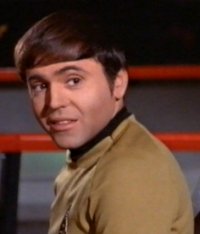
You are Chekov


Chekov
75%
Uhura
60%
An Expendable Character (Redshirt)
50%
Deanna Troi
45%
James T. Kirk (Captain)
40%
Spock
40%
Data
40%
Geordi LaForge
35%
Worf
35%
Jean-Luc Picard
30%
Mr. Scott
20%
Beverly Crusher
20%
Mr. Sulu
15%
Will Riker
15%
Leonard McCoy (Bones)
10%
Brash, rash and hasty,
but everyone loves you.


Click here to take the Star Trek Personality Test

Wednesday, May 13, 2009

Tarantino vs. The Tempest

This weekend, by a curious coincidence, I happened to see two movies (or parts of movies) that are almost polar opposites of each other: Kill Bill, Quentin Tarantino's epic, two-part, and unbelievably bloody homage to kung fu and mobster movies; and The Tempest, Shakespeare's comedy about a wronged duke who exacts vengeance but then grants forgiveness to his enemies. (Find a synopsis of Kill Bill, Volume 1 here and a synopsis of Kill Bill, Volume 2 here). I admit I only watched bits and pieces of Kill Bill because I was so appalled at the level of violence in the clips I saw that I feared watching the whole movie would be absolutely unbearable. In between, still feeling a bit queasy from the virtually nonstop gore-fest that is Kill Bill, I happened to catch Shakespeare in Love,the brilliant little fantasia that imagines Romeo and Juliet was inspired by a doomed love affair in the young Bard's own life. Indeed, I think it was seeing Shakespeare in Love that motivated me to seek out some of The Bard's actual work as a kind of antidote to the mindless cruelty of Tarantino's films. The Tempest, as it turned out, provided some particularly excellent counterpoint.

As near as I can figure, Kill Bill is simply a gigantic bloody revenge story. Shakespeare was no stranger to bloody revenge stories (Titus Andronicus being the most gruesome and Hamlet being the most famous), but Kill Bill is so blood-soaked that it makes these latter two plays look like episodes of the Teletubbies in comparison. A female assassin known as The Bride (Uma Thurman), finding she is pregnant, decides to get married, go straight, and make a new life for herself and her daughter to be. The day of the wedding rehearsal, however, the entire wedding party is massacred by a team of hitmen dispatched by The Bride's former boss and sometime lover, the crime boss known simply as Bill (David Carradine). The Bride is left for dead, but wakes up from a coma years later, bent on revenge. She trains with a martial arts master to take her homicidal skills to the next level, and, armed with a samurai sword, sets out to chop, kick, smash, slice, and dice her way through what seems to be thousands of Bill's friends, associates, rivals, and minions, all in an effort to get to the man himself.

When she finally succeeds in locating Bill, their final confrontation seems strangely anticlimactic, and she weeps over his dead body. Has her single-minded quest for revenge truly made her happier? She finds the daughter she carried has survived and is actually Bill's child (the cherubic B. B., played by Perla Haney-Jardine). The last shots of the film are of The Bride and B. B. enjoying quality mother-daughter bonding time in a hotel and driving away joyously looking forward to their new life together. The message seems to be that once the Bride has taken revenge on the bastard who hurt her so cruelly, she can finally begin to live.

Contrast this with the plot of The Tempest. Prospero, the Duke of Milan, was wrongly exiled by his treacherous brother Antonio, who was in league with Alonso, the King of Naples, Prospero's enemy. Prospero causes the title tempest to bring all of his enemies together on the island, but explains to Miranda that he prevented anyone from being killed in the storm (Act I, Sc. ii, 30-38). The Bride doesn't seem to care whom she slaughters in her effort to get to Bill. Prospero, by contrast, when he has all of his enemies before him, demands only that his dukedom, that which was rightfully his, be restored to him. He does not punish Antonio any further, but instead forgives him. Would The Bride have said anything like this to Bill?

Flesh and blood,
You, brother mine, that entertained ambition,
Expelled remorse and nature; whom, with Sebastian—
Whose inward pinches therefore are most strong,—
Would here have killed your king; I do forgive thee,
Unnatural though thou art.
(Act V, Sc. i, 81-86)


Somehow, I don't think so. Prospero keeps his promise to release Ariel and even releases Caliban, who had attempted to assault Miranda before the play began (Act I, Sc. ii, 410-416). Caliban comes to recognize the error of his ways and berates himself for plotting against Prospero and forming an alliance with the drunken and venial Stephano and Trinculo:

I'll be wise hereafter,
And seek for grace. What a thrice-double ass
Was I to take this drunkard for a god,
And worship this dull fool!
(Act V, Sc. i, 341-344)


Stephano and Trinculo are likewise forgiven. When he realizes Prospero has saved his son Ferdinand's life, King Alonso begs forgiveness for his part in Prospero's exile. Prospero willingly grants this forgiveness. It struck me while watching the film that The Tempest is practically a meditation on the importance and power of forgiveness. Nobody in Kill Bill, to my knowledge, asks for, receives, or grants forgiveness— or the enlightenment that can come with it.

Kill Bill? If it's Bill Shakespeare, no. I think Shakespeare's plays will be read, acted and discussed long after the films of Quentin Tarantino—especially dreck like Kill Bill—are consigned to the cinematic trash heap where they belong.

Tuesday, May 12, 2009

Proud Supporter of the "Army of Oppression"


I paid my dues and renewed my membership in the army of oppression Knights of Columbus last night.

Wait, what?

The Knights of Columbus are an "army of oppression" because they oppose same sex marriage?

The pope and Catholic bishops are "discredited leaders" because they believe condom distribution isn't really an effective means of slowing the spread of AIDS and other sexually transmitted diseases?

Such opinions would no doubt come as a shock to the members of my local K of C Council, but apparently they have been espoused by one Harry Knox, a member of President Obama's Advisory Council on Faith-based and Neighborhood Initiatives. Fred Lucas, a correspondent for the Cybercast News Service (CNS) reported Knox's comments in a story here.

It seems Mr. Knox was upset because Knights in California supported Proposition 8, a proposed amendment to the California state constitution that would have defined marriage as a union between one man and one woman. The State Supreme Court had earlier issued a ruling saying that limiting the definition of marriage to heterosexual couples was unconstitutional discrimination. The ballot measure, a response to the ruling, passed 52.5% to 47.5% (Darn pesky voters!)

Lucas reports:

On Mar. 19, Knox told the San Francisco-based gay newspaper The Bay Area Reporter, “The Knights of Columbus do a great deal of good in the name of Jesus Christ, but in this particular case [Proposition 8], they were foot soldiers of a discredited army of oppression.”


The newspaper further reported: “Knox noted that the Knights of Columbus ‘followed discredited leaders,’ including bishops and Pope Benedict XVI. ‘A pope who literally today said condoms don't help in control of AIDS.’”


While I appreciate Mr. Knox's admission that the Knights do some good, I'd also point out that there is evidence that condoms don't help, and the pope isn't the only one who says so.

Edward C. Green, director of the AIDS Prevention Research Project at the Harvard Center for Population and Development Studies, writes in a letter to the British medical journal Lancet:

Could condom promotion exacerbate epidemics? The phenomenon of risk compensation—engaging in higher-risk behaviours because risk reduction technology conveys a greater sense of safety than warranted—could account for higher infection rates, and has been suggested by at least one randomised, controlled study, which found that “gains in condom use seem to have been offset by increases in the number of sex partners.”


In other words, people can mistakenly conclude that as long as they have a condom, irresponsible casual sex that dehumanizes both parties is "safe" and can encourage people to spread disease. Funny, that sounds a lot like what the Pope said:

.."I would say that this problem of AIDS cannot be overcome with advertising slogans. If the soul is lacking, if Africans do not help one another, the scourge cannot be resolved by distributing condoms; quite the contrary, we risk worsening the problem. The solution can only come through a twofold commitment: firstly, the humanization of sexuality, in other words a spiritual and human renewal bringing a new way of behaving towards one another; and secondly, true friendship, above all with those who are suffering, a readiness — even through personal sacrifice — to be present with those who suffer. And these are the factors that help and bring visible progress".


But that's not all. Even when the facts are against them, gay rights activists are not only targeting the K of C as an organization, but are also harassing individual Knights who freely volunteer their time to raise money for organizations that support people with mental retardation and developmental disabilities.

It seems that one Brad Allison, a gay man from Fair Oaks, Va. took it upon himself to decide that the Knights of Columbus were a "hate group" because the Knights opposed same-sex marriage, complained to the management of his local grocery store because Knights were soliciting donations there, and harassed both Knights and grocery store patrons who wanted to make donations.

Mr. Allison claims that the Knights' charitable fundraising activities are just a cover for "hate" and compares the Knights to the Ku Klux Klan. These claims are despicable and outrageous. I personally have participated in these fund drives for many years and I know that the overwhelming majority of money raised (on the order of 80%) directly to local people and organizations that need it. Most of the remaining 20% goes to organizations that provide assistance at the state level. Only a tiny fraction of the money is used for administrative costs, and NONE of it is used for other projects such as support of Proposition 8. I have been present when checks have been presented and heard emotional firsthand testimonials about how the money is used and how much it is appreciated.

I find Mr. Allison's comparison of the K of C to the KKK to be particularly absurd, given that for many years I was a member of a council in which most of the officers were African-American. It was one of the most racially integrated and convivial organizations I have ever belonged to. The KKK was and is also staunchly anti-Catholic, which is obviously not true of K of C. No, the only "oppression" going on as far as the Knights of Columbus are concerned is in the minds of radical homosexual activists such as Knox and Allison--which they would know if they bothered to check facts rather than simply indulge in slander and name-calling.

Hat Tips: Mark Shea and Joanna Bogle.

Thursday, April 23, 2009

Speaking of Shakespeare (Literally)


Zounds! From that worthy curate, Father Z., we have received tidings that today is Talk Like Shakespeare Day. Come thou, sirrah! Be not a prating coxcomb! Hie thee hence, and visit the site! Stay thee not, thou whoreson zed, thou unnecessary letter! The event is sponsored by men and women, all merely players, known as the Chicago Shakespeare Theater, no doubt to praise the work of the Immortal Bard, not to bury him.

Yea, verily what manner of fortune is this? No more than two days hence, we have posted this treatment most comical of Richard III, that there is a day in honor of the Sweet Swan of Avon? And I almost missed it? O Great Jove! It makes me mad to think on't!

[Exeunt omnes]

Tuesday, April 21, 2009

You've never seen Shakespeare Like This (Thank Goodness!)

Under Mark Shea's pernicious influence, I've been fooling around with Xtranormal.com, the site that allows you to make movies (after a fashion) by simply typing in a script. Users type in a script and choose a setting, camera angles, background music, preset digitally created characters, and synthesized voices to act out the scene. Here, for example, is my favorite Shakespearian soliloquy from Richard III, Act V, Scene iii. The results are (ahem) slightly unconventional:


I expect to be haunted by Shakespeare's ghost for the rest of my life now.

Tuesday, April 14, 2009

The Next Generation of Heroes . . .

is coming.

Jeff Hebert, the creator of HeroMachine v. 2.5, one of the coolest websites and software packages ever, has been hard at work on the next major upgrade to HeroMachine since early in January. HeroMachine v. 3.0 will have a huge number of new features, including a larger color palette, greatly expanded layering capabilities, new accessories for characters, and the ability to mark characters and equipment with patterns, including camouflage, tartan, and metallic. But that's not all. With version 3.0, aspiring artists and creators of superheroes will have the opportunity to select individual body parts for the characters, and have the ability to move, scale, and rotate those body parts and accessories, in effect, customizing the look of each character.

Jeff has set up an "alpha" test version of HM 3 (even earlier in the development process than a beta version) and is actively seeking comments, suggestions for improvement, feedback, and bug reports from users. He's been gradually adding and enabling features and components and hopes to have the site completed by some time this summer. Here's a sample character that I created on the new site, Red Hawk:


This looks like it will be really cool when it gets all done. If you like comic books or superheroes or have dreamed of creating your own characters, head on over. In the immortal words of Mark Shea, "Check thou it out."

Another Look at Susan Boyle

Sorry for the repetition, but I just can't get enough of this. What I love about this woman, aside from her obvious vocal talent, is her saucy, sassy attitude and her determination to be absolutely herself, no matter what. The little victory dance she does at the end is just priceless. She knows she doesn't have the fashion model good looks, but she knows she has the musical ability and the drive to see how far it can take her. Would that we all had such courage.


Videos tu.tv


Hat tip to: Patrick Archbold of Creative Minority Report for the clip.

Monday, April 13, 2009

Wow! Again!


From the same people who brought you Paul Potts, here comes Susan Boyle, a frumpy-looking, 47 year-old Scottish woman with a great sense of humor, great talent, and great self-confidence. She's living proof of that old saying, "You can't judge a book by its cover."

Hat tip to Father Dwight Longenecker of Standing on My Head.

Sunday, April 12, 2009

Exsultet!

Have a happy and blessed Easter everyone! I've just returned from the Easter vigil at my parish, where our cantor chants the magnificent Easter Proclamation (called the Exsultet, after its first Latin word meaning "Rejoice!") Here's a link to a page with the Latin text and an English translation. And here's some video of the Exsultet chanted in Latin by the monks of Birmingham Oratory in Birmingham, England:


For those of you who are Latin-impaired (a group that includes me, but I'm determined to work on that), here's another video of the Exsultet with the text in English:


He is Risen! He is Risen Indeed!

Tuesday, April 07, 2009

An Open Letter to the President


April 7, 2009

President Barack H. Obama
The White House
1600 Pennsylvania Avenue
Washington, DC 20500

Dear Mr. President:

As a Catholic, as an American, a person with a disability, and as a human being, I must register my profound and unflinching opposition to the egregiously misnamed “Freedom of Choice Act” (FOCA) which has been proposed in Congress and which would in effect make the principle of abortion on demand at any time for any reason the law of the land in the United States. You are on record assuring an audience of Planned Parenthood members and supporters that FOCA would be one of the first pieces of legislation you would sign and that you “will not yield” in your support of this legislation. As I understand it, the legislation as it stands would:
  • eliminate any restrictions on abortion including restrictions on late-term abortions, waiting periods before abortions, and parental notification and consent provisions when minor children request abortions—even when polls have consistently shown that the majority of voters support these restrictions as reasonable;
  • prevent states or municipalities from passing any laws or ordinances prohibiting or restricting access to abortion within their borders, despite the will of their citizens clearly and legally expressed through such means as votes by state legislatures, ballot initiatives, or referendums;
  • and prohibit doctors and hospitals that object to abortion on moral or religious grounds from refusing to perform abortions without risking the loss of government funds or medical licenses.
Mr. President, in your inaugural address, you quoted the father of our country, George Washington, as he attempted to rally the Continental Army during the darkest days of the American Revolution. May I remind you, sir, that at the very beginning of that titanic struggle, the founders of our nation declared:

We hold these truths to be self-evident, that all men are created equal, that they are endowed by their Creator with certain unalienable Rights, that among these are Life, Liberty and the pursuit of Happiness. — That to secure these rights, Governments are instituted among Men, deriving their just powers from the consent of the governed, — That whenever any Form of Government becomes destructive of these ends, it is the Right of the People to alter or to abolish it, and to institute new Government, laying its foundation on such principles and organizing its powers in such form, as to them shall seem most likely to effect their Safety and Happiness.
Mr. President, I submit it is no accident that the founders enumerated the first unalienable right as the right to life. The right to life is the fundamental human right. Without that, all other human rights are meaningless. The founders were also wise enough to see that the right to life is not granted by the power of the state, nor the authority of the government, but by the will of Almighty God. If a right granted by God, it ought not be taken away by human beings without the most profound consideration and reflection and except in the very gravest of circumstances. For this reason, the Catholic Church has been most forthright in its opposition to both capital punishment and to unjust or unnecessary war when peaceful means exist to resolve disputes between nations. Surely, Mr. President, you would agree with Catholic teaching in these latter cases. I earnestly entreat you to consider making your position more amenable to Catholic teaching on the issue of abortion.

Mr. President, the provisions now proposed, whether in FOCA as a whole or enacted piecemeal through other legislation, will trample on the fundamental right to life for millions of unborn Americans, the most innocent, vulnerable, and defenseless among us, children in the womb. Some may argue that a fetus in the womb is not, in any biological, legal, or moral sense a person with rights that must be respected under law. But surely you sir, as an African-American, know that similar arguments were once used to deny African-Americans their fundamental rights of life and liberty? Let us not go back to such dark days and such specious reasoning. If a fetus in the womb is denied its fundamental rights to life and liberty, it will never even have the opportunity to develop into a being that would be universally recognized as a human person. Thus, a unique and irreplaceable human life would be lost. Mr. President, if we have the power to prevent such a tragedy, let us do so. I implore you to reconsider your support for this legislation.

Not only will this legislation trample on the rights to life and liberty of the unborn themselves; it will trample on the rights of liberty of conscience, both for institutions such as hospitals supported by religious organizations and for individual doctors, nurses, and other health care providers who refuse to provide, participate in, or enable abortions for moral or religious reasons. Just as the right to life is the first unalienable and divinely granted human right, the right to practice one's religion in accord with the dictates of one's conscience is among the very first liberties guaranteed Americans by the First Amendment to the U. S. Constitution.

Finally, not only would this legislation run roughshod over fundamental human rights of life and liberty, but it would also make a mockery of American principles of federalism and representative government. If the will of the people in a specific locality regarding something so fundamental as the protection of human life can always and everywhere be overridden by a federal mandate, than we as a nation have gone a very long way towards surrendering our essential liberties.

In short, Mr. President, I believe this legislation and its provisions, whether enacted in whole or in part, constitute nothing less than a direct and deliberate assault on fundamental human rights to life, liberty of conscience, and representative government, and I will do everything in my power to oppose them. In my view, FOCA would be profoundly destructive of the ends of good government enumerated by the founders, and I fully intend to utilize my rights as an American to lawfully alter or abolish the government that pursues such destructive and evil policies. Destroying the lives of the innocent can never be justified as health care, and ignoring the conscience and will of the people can never be defended as good public policy.


Sincerely,

Neil R. Leslie

Monday, April 06, 2009

Happy National Tartan Day!


for, as long as but a hundred of us remain alive, never will we on any conditions be brought under English rule. It is in truth not for glory, nor riches, nor honours that we are fighting, but for freedom -- for that alone, which no honest man gives up but with life itself.
The Arbroath Declaration.

Happy National Tartan Day! On this day in the year 1320, a delegation of Scottish nobles signed a letter composed by the abbot of Arbroath Abbey and sent to to Pope John XXII, declaring that Scotland would never submit to English rule and appealing to the pope for a judgment against the English. One of the signatories, Andrew Leslie, may have been a distant ancestor of mine. This document is considered Scotland's national declaration of independence and may have been a model for the American Declaration of Independence some 400 years later. April 6 has since become known as National Tartan Day an opportunity for Americans of Scottish descent, such as your humble blog host, to show off their Scottish pride. Hat tip to the incomparable Fiona Ritchie, host of The Thistle & Shamrock, for bringing this to my attention.

Suas Alba! (Loosely translated: Up with Scotland, Hurray for Scotland, Scotland Rocks, etc.)

Thursday, March 26, 2009

Fire Flying

Ni hao! I may be the last gorram feller in the gorram 'verse to find out about Firefly, but I think it may be the best goram vid on the whole gorram cortex! Take a gander if you've a notion! It's shiny!

Translation: Hello! I may be the last person in the (ahem) gosh darn universe to find out about the television show Firefly, but I think it may be the best darn TV show available on the whole darn internet! Go watch it if you would like! It's excellent!

A high-speed internet connection is a marvelous thing; it allows me to waste time in ways previously unimaginable, visiting sites such as YouTube.com, CBS.com, and Hulu.com and watching classic (and not-so-classic) TV from years gone by.

My latest discovery is the late, lamented science fiction/Western hybrid Firefly which ran for only 11 of its 14 scheduled episodes on the Fox network in 2002 before it vanished from the network's lineup. There was such an outcry from fans that the show's producers decided to release the entire series as a DVD boxed set, which led in turn to a cast reunion and a big-screen movie, titled Serenity, in 2005. The movie was designed both to fill in crucial gaps in the characters' backstories and tie up loose ends created by the series's abrupt cancellation. The Firefly boxed set and Serenity movie are available for sale at Amazon.com and the Serenity movie is also available for rental and streaming internet playback to Netflix.com subscribers. I'd heard good things about the show for years but missed it during its original all too brief network run. When I saw it was available on Hulu.com, I started watching the pilot and was immediately hooked.

Firefly comes from the fertile, somewhat twisted imagination of Joss Whedon, creator of Buffy, the Vampire Slayer and its spin-off series Angel. I've never been a big fan of the horror genre in general or vampire stories in particular, so I was never a big Buffy watcher. The few times I did happen to catch the show while channel surfing however, I had to admire its truly original premise, smartly constructed plots, well-drawn characters, and some of the wittiest dialogue on television.

Those same characteristics are much in evidence with Firefly. As a brief prologue to the later episodes explains, in the 26th century when Earth's resources are exhausted, humanity begins moving out into space and converting other planets into replicas of Earth. The most powerful planets form a technologically advanced but corrupt and authoritarian Alliance and attempt to force all the planets to join. The "independents" or "browncoats" refuse, and a bloody galactic civil war follows.

After the browncoats are decisively defeated at the battle of Serenity Valley, the remaining independents move to the far fringes of settled space, where representatives of the Alliance are scarce and high technology is hard to come by. Hence, Firefly's vision of the 26th century looks and sounds a lot like the 19th--with a few twists. Characters speak a bizarre blend of Mandarin Chinese, slang invented for the series, and a rustic dialect of English that sounds as if it came from every Western movie ever made. In battle, characters are just as likely to reach for six-guns as they are for ray guns, and desperadoes on horseback coexist with stormtroopers in battle armor. The show's musical score is just as likely to feature fiddle, banjo, and guitar as it is the orchestral music or electronica that you might find in more conventional science fiction. The final image of the opening credits, a starship hovering over a corral, perfectly summarizes the show's blend of space opera and horse opera motifs:


Sergeant Malcolm "Mal" Reynolds is a survivor of the battle of Serenity Valley and an embittered browncoat. In an effort to start over again after the war, he's promoted himself to captain, bought a rusting, obsolete "Firefly" class freighter, dubbed her Serenity, and assembled a ragtag crew: former war buddy Zoe, as tough as any man, as his first officer; Wash, Zoe's wisecracking husband, as pilot and navigator; the eternally pert and perky Kaylee as ship's mechanic, who, despite her girlish demeanor, is a whiz with machinery; Inara, a highly trained and officially licensed "companion," or courtesan; and Jayne, the hired muscle, whose mercenary temperament leads him to try to betray his captain more than once.

In the show's 90-minute pilot episode, the starship Serenity picks up three more passengers: Book, a "Shepherd," or minister for an unspecified, perhaps pan-Christian denomination; Dr. Simon Tam, a brilliant young surgeon; and his sister River, a child prodigy whose mind has been cruelly damaged by horrific experiments at the hands of Alliance scientists. Simon has sacrificed his promising career to rescue River from the "Academy" where she was being tortured, and now the two of them are wanted fugitives. Somewhere in the deeply troubled recesses of her mind, River holds secrets that could bring down the Alliance.

Over the course of the series, characters grow, change, and reveal more sides of themselves. Mal, for example, has an almost Victorian moral code, and I mean that in the best possible sense. He can't stand to see a woman abused or mistreated; so much so that he'll risk his life and his crew to defend a bordello full of prostitutes who are being terrorized by a local bigwig. He hates the fact that Inara, whatever she may call herself, is a prostitute, and shows signs of being in love with her, feelings she may secretly reciprocate. When he finds he has stolen a load of desperately needed medical supplies, he'll risk his life to return the supplies to their intended recipients and willingly incur the wrath of the vicious gangster who hired him to steal the supplies in the first place.

Shepherd Book, for his part, seems to have more knowledge of military and security matters than a clergyman otherwise might, suggesting that he too has a troubled past. It's clear that Mal has lost his religious faith as a result of the events at Serenity Valley, and had the show continued, I would have liked to have seen the relationship between the two men develop further and the writers grapple more with issues of faith and belief.

In short, Firefly has a little bit of everything: plenty of action, quirky, unconventional characters, Emmy-winning visual effects, and--I almost forgot--bloodthirsty space-going zombies called Reavers--truly something for everyone :) If you like science fiction or Westerns or wonder what a blend of the two genres might look like, head on over to Hulu.com today and start watching. The browncoats need you.

Friday, March 20, 2009

Who Watches the Watchmen? Not I

Watchmen / Alan Moore, writer; Dave Gibbons, illustrator /letterer; John Higgins, colorist. New York: DC Comics, © 1986-1987.

I finally found something to rouse me out of my torpor and motivate me to start blogging again. I recently finished reading Alan Moore's graphic novel Watchmen, which, judging from the adulation heaped on it and the hype and ballyhoo surrounding the release of the movie version, is the biggest thing to hit comics since colored ink. Here's a sample of the blurbs on the back cover:

"A work of ruthless psychological realism, it's a landmark in the graphic novel medium," says Time Magazine. They rate it as one of the 100 best novels (not just graphic novels, but novels, period) since 1923. Why 1923, I don't know.

"Watchmen is peerless," says Rolling Stone.

"Remarkable . . . The would-be heroes of Watchmen have staggeringly complex psychological profiles, says the New York Times Book Review.

"A brilliant piece of fiction," says The Village Voice.

"Groundbreaking," says USA Today.

"A masterwork representing the apex of artistry," says Entertainment Weekly.

"The greatest piece of popular fiction ever produced," says Damon Lindelof, the co-creator of Lost.

Most of the reader reviews on Amazon.com are similarly glowing, but a significant number are not. I beg to differ with the majority view and firmly register with the minority.

My opinion? Somewhere between "Meh," and "Yuck," leaning heavily toward the latter. I found Watchmen a grim, joyless, dispiriting work with an atheistic, nihilistic, and pessimistic worldview that deliberately and consistently inverts, subverts, and perverts everything that makes reading superhero comics fun and enjoyable in the first place. The book's title is based on a quotation from the Roman poet Juvenal: Quis custodiet ipsos custodes? (Who watches the watchmen?) that was used as the epigraph for the Tower Commission's report on the Iran-Contra affair in 1987. Like the Tower Commission, questions about the abuse of power and authority and the nature of good and evil are clearly on Moore's mind here. He uses the conventions of the superhero story to try to make points about larger issues, but I disagree about as profoundly as I possibly can with his point of view and his conclusions.

Nevertheless, I wanted to read the book because about a year ago, as a relative newcomer to the world of comics, I created some superhero characters myself and started trying to create a fictional universe for them to live in. I wanted to see if the kinds of stories I had in mind for these characters would sell, so I set out to do a little unsystematic market research. I wanted to read titles that seemed representative of the market for superhero stories as a whole, and I wanted to read books that were considered essential and highly influential in the comics industry. Watchmen was a name that kept coming up on both counts.

Before reading the book, I knew Watchmen had a reputation for being much grimmer and grittier than the average mainstream superhero comic, and was something of a landmark for having largely introduced this element of darkness and grit into comics as a whole. I knew the journey into the world of Watchmen might not always be fun, but I thought it would at least be interesting and instructive. It was not. I started reading the book before Christmas but gave up about halfway through because I found it so relentlessly bleak and depressing. When I heard about the release of the movie version I decided to dig out the book again and push through to the end before making a final decision about it. I thought perhaps I had misjudged or misunderstood the work. I had not. My initial assessment still stands. I did not enjoy this book and cannot recommend it. I don't get the hype. What makes it so wonderful?

The story begins in 1985 as someone is murdering or otherwise eliminating the members of a defunct and discredited team of masked amateur crime fighters, the Minute Men. The latest victim is Eddie Blake, aka The Comedian, a thug and a rapist every bit as brutal as the criminals he fought against. Another former member of the group, the paranoid and psychotic Walter Kovacs, aka Rorschach, who plainly enjoys intimidating and torturing real or perceived enemies, is conducting his own investigation into The Comedian's death. With the reluctant help of two other former vigilantes, Dan Dreiberg, aka Nite Owl, and Laurie Juspeczyk, aka Silk Spectre, Rorschach follows the conspiracy to its source: Ozymandias, aka Adrian Veidt, another former masked adventurer who has given up crime fighting, become a multimillionaire, and established a reputation as "the smartest man in the world."

Veidt has concluded that simply fighting crime isn't enough. He concocts an insane plan to remake the world in his own image by fabricating the appearance of an alien invasion, destroying half the population of New York City in the process, and forcing humanity to put aside its internal conflicts and unite in the face of the supposed alien threat. Ironically, Veidt's plan works to perfection. Not even the godlike abilities of Dr. Manhattan, the only member of the team with "superpowers" in the traditional comic book sense, can prevent the catastrophe; in fact, Dr. Manhattan refuses to intervene, for his own reasons.

The messages behind the book seem abundantly, almost unmistakably clear to me. Chapter VI, Rorschach's horrific origin story, ends with this declaration by his psychiatrist:

Why do we argue? Life's so fragile, a successful virus clinging to a speck of mud suspended in endless nothing . . . . The horror is this: in the end, it is simply a picture of empty meaningless blackness. We are alone. There is nothing else.


None of the subsequent events of the book do anything to challenge the psychiatrist's pronouncement. The power of God will not save the world because there is no God. If Dr. Manhattan is meant to symbolize God in any way, he will not intervene to save humanity; in fact, he destroys Rorschach for refusing to go along with Veidt's plans and decides to leave Earth forever to visit other "less complicated" galaxies. When Veidt points out that Dr. Manhattan has regained an interest in human life, the doctor replies, "Yes I have. I think perhaps I'll create some," and vanishes.

Moore also seems to imply that conventional heroism will not save humanity because in the end there is no moral difference between the so-called heroes and so-called villains. The Comedian and Rorschach are just as brutal and sadistic as their alleged enemies. The US government recruits The Comedian for all manner of despicable "black ops" missions that the government can later deny. The only "supervillain" we actually see, the former Moloch the Magician, is no longer a master criminal; when Rorschach terrorizes him in order to gain information, Moloch is just a sick old man dying of cancer who wants only to be left alone. Nite Owl, the character most like a conventional superhero, with a genuine desire to do good, is literally and figuratively impotent, both in the sense of being unable to affect the story's outcome and in the sense of being unable to consummate his desire for Silk Spectre--unless he is wearing his Nite Owl costume.

In his essay, A Defence of Penny Dreadfuls, written more than a hundred years ago, G. K. Chesterton argued that popular fiction, ranging from fairy tales to the epic adventures of King Arthur and Robin Hood, and even the "penny dreadfuls," or mass-produced sensational fiction of his time, served two purposes. It fulfilled a basic human longing for stories of heroism and adventure and it taught a basic moral code. Chesterton responded to the so-called intellectual sophisticates of his time who looked down their noses at "penny dreadfuls" even as they looked down their noses at the moral codes contained therein:

And with a hypocrisy so ludicrous as to be almost unparalleled in history, we rate the gutter-boys for their immorality at the very time that we are discussing (with equivocal German professors) whether morality is valid at all. At the very instant that we curse the Penny Dreadful for encouraging thefts upon property, we canvass the proposition that all property is theft. At the very instant we accuse it (quite unjustly) of lubricity and indecency, we are cheerfully reading philosophies which glory in lubricity and indecency. At the very instant that we charge it with encouraging the young to destroy life, we are placidly discussing whether life is worth preserving.


Chesterton argued that in many respects he preferred the simple morality of the "penny dreadful" and the people of the lower classes who read them to the fashionable despair of the intellectual elites:

So long as the coarse and thin texture of mere current popular romance is not touched by a paltry culture it will never he vitally immoral. It is always on the side of life. The poor--the slaves who really stoop under the burden of life-- have often been mad, scatter-brained, and cruel, but never hopeless. That is a class privilege, like cigars. Their drivelling literature will always be a "blood and thunder" literature, as simple as the thunder of heaven and the blood of men.


I would suggest that the pulp novel, the old time radio show, and the Golden Age comic book of the 1930s and '40s were the successors to the "penny dreadfuls" of Chesterton's day. No one could possibly confuse the high-mindedness of Superman or the Shadow's stern warning: "The weed of crime bears bitter fruit! Crime does not pay!" with the nihilism and brutality of Rorschach and The Comedian. When I was a boy, I wanted to be Superman. Some days I still wish I could be. Who would want to be Rorschach?

I would also suggest that in Watchmen, however, we have what Chesterton might have regarded as the worst of both worlds: a work of popular fiction infected with the nihilism and cruelty of the intellectual elites. It's the product of a "paltry culture" indeed, if reviewers think that such a thing qualifies as high art. Watchmen is not "on the side of life;" it is, at its heart, on the side of death. It reeks of hopelessness and despair. It holds that the thunder of heaven is merely thunder and never the voice of heaven; and that men and women never spill their blood for any good purpose, even to save their country, their family, or each other.

Who watches the watchmen? Not I.

Thursday, March 19, 2009

Some Curry With Your Kryptonite?

Here's an unintentionally (?) hilarious little clip from an extremely low-budget Superman movie knockoff produced by India's film industry (sometimes referred to as Bollywood). Supes looks to have put on a few pounds, and I'll swear the guy's wearing a false nose. Lucky for us, the person who originally posted this video has helpfully provided English subtitles which add to the hilarity. Hat tip: Saint Superman.

Tuesday, January 06, 2009

Father Barron on The Dark Knight

Since I'm trying to create some superhero characters of my own, I found this reflection by Father Robert Barron on the superhero concept and its philosophical and theological problems to be quite interesting. He focuses his attention on the recent Batman movie The Dark Knight, but he mentions other popular superheroes in passing and his observations could be applied to just about any superhero character. Father Barron has a real gift for packing a great deal of thought-provoking material into the ten minutes or less allowed by YouTube.

Thursday, December 18, 2008

Does This Look Freakin' Awesome


Or What?

Hat Tip: Mark Shea. As I said in my comment over on Mark's blog:

All I've got to say is anybody, and I do mean anybody, is a better producer/director team than Rick Berman and Brannon Braga who sold out and ran out of ideas somewhere between the middle of Voyager and the beginning of Enterprise. I found those shows hard to take. This, on the other hand, looks freakin' awesome. As a long time Trekkie, however, I'll withhold my final judgment until I see the finished product. I've had my heart broken before.

Mangled Mentorship, But Merry Christmas Anyway.

I find myself with some free time I didn't entirely want. When last I reported I was getting ready to start teaching two sections of a business communications class for the University of Phoenix Online under the supervision of a faculty mentor. I think two sections turned out to be about one section more than I could handle effectively. Unfortunately, the whole experience went badly and ended abruptly. I fell behind early in the class, in part because of having a colonoscopy during the first week, and I was never really able to catch up. Things went from bad to worse once my old enemies, depression, despair, and panic kicked in. I fell so far behind in grading assignments and providing feedback to students that my mentor and the mentorship team decided to cancel the mentorship in the middle of the course and turn my classes over to someone else.

To say I'm disappointed is an understatement. I seem to have developed a remarkable talent for self-sabotage and shooting myself in the foot. I have no idea what I'm going to do now to support myself. Plans I made that were contingent on successfully completing the mentorship and getting a part-time gig with U of P will have to be put on hold if not completely scrapped.

As if that weren't bad enough, it looks as though I won't be able to spend Christmas with my family as I usually do. My brother Bill, who usually provides the transportation, is working through Christmas this year. He is, however, planning to visit me a few days after Christmas, and we'll go up to see the rest of the family then.

In spite of all of this, I am doing my best to maintain my good humor and Christmas spirit. I have a few small Christmas decorations up, and I've dug out all my Christmas music. Sometimes I worry about the future, but at other times I have a certain inexplicable feeling of peace (perhaps it's just naive optimism) and an assurance that somehow things will be OK. I've been watching more TV than usual, and I notice that most Christmas specials these days are long on twinkly lights, pretty music, Santa Claus, and banal, meaningless phrases such as "the magic of the holiday season," and short on references to the real reason for all the gaiety: the birth of Jesus Christ. All the pretty lights, artificial snowflakes, and presents in the world won't make us happy if we don't realize that God has already given us the greatest gift we could ever hope to receive: the gift of Himself.

Christians believe that two thousand years ago, more or less, God Himself came into the world as a human being in the person of Jesus. I take great comfort in the thought that when he came, Christ didn't come to the big people, the important people, the successful people--just the opposite. He came to the little people, the people who were insignificant in the way the world measures significance and success. His mother was a humble little teenage Jewish girl who was astonished that she should be chosen for such an honor; his foster father was a carpenter and a stonemason who was concerned about the hint of scandal and gossip surrounding Mary but took her in anyway. They lived in a backwater town in a backwater province of the Roman empire. According to Luke's gospel, the first people to receive news of this extraordinary birth were shepherds, people at the very bottom of the social and economic ladder, people who were forced to spend the night outside when everyone else was safe and warm indoors.

In his earthly life, Jesus experienced just about all the painful things a human being can experience: hunger, thirst, anger, rejection, loneliness, betrayal, paralyzing fear, an agonizing and public death, and the apparent failure of everything he had worked for. Yet by that death and his incredible, miraculous resurrection from it, Christians believe, Jesus changed the nature of life and death and the relationship between God and humankind. God desires a relationship with each and every human being--so much so that he was willing to become a human being. Death is not the end of the story. The power of God can overcome anything, even death itself. Jesus didn't come into the world to suffer and die and rise again in order reward us for being perfect little ladies and gentlemen and for always doing everything right. He came to save us because we needed saving. He came to save sinners and screw-ups like me. These are the messages of the two greatest feasts of the Christian year, Christmas and Easter.

As I've mentioned before on this blog, I had a profound crisis of faith several years ago when my father died, I developed serious health problems of my own, and a precious personal relationship ended abruptly, all at once. I had to go all the way back to first principles and ask myself why I was a Christian. The answer I kept coming back to was that if there was a God I could believe in, he couldn't be an airy-fairy, intangible intelligent something-or-other, away off in the ether, so far beyond my understanding that I couldn't begin to relate to him or even be certain he was there. That seemed only a short step from atheism, which I've always found repellent. But a God who lived as I live, suffered as I suffer, died as I will die, and who rose again to show me there is something beyond death--that was a God I could believe in; a God who came to Earth to show me something of what the God in Heaven looks like--that was a God I could love. The Incarnate, Crucified, and Risen Lord Jesus Christ gives me the joy and peace of mind I need to say "Merry Christmas!" and mean it whether or not I have a job, whether or not there are any presents under my tree, and whether or not I am with my family.

Merry Christmas!

Sunday, December 14, 2008

Celtic League of Superheroes Teaser Trailer #3

This is the third in a series of superhero videos featuring my original characters The Celtic League of Superheroes. This video was inspired by Karl Jenkins's dramatic arrangement of the traditional Catholic funeral hymn "Dies Irae," (Day of Wrath). It sounded like the kind of thing you might hear in a Batman movie. Enjoy!


Saturday, November 01, 2008

The New Liberty Legion Trailer

In this, my latest video, my World War II superheroes, The Liberty Legion, get a makeover and an update as I move to a different superhero generator and they move to the present. Enjoy!